Welcome to the Back Matter Break Down! For my final blog post of the year, I must have Christmas and holidays on the brain which is why I gravitated towards this book featuring reindeer. But let’s be clear, this is NOT a Christmas book! Instead we have a autumnal color palette with a mix of math and lessons in inclusion, all wrapped up in a delightful rhyming package! The back matter is going to give us plenty of things to talk about too, so let’s dive in!
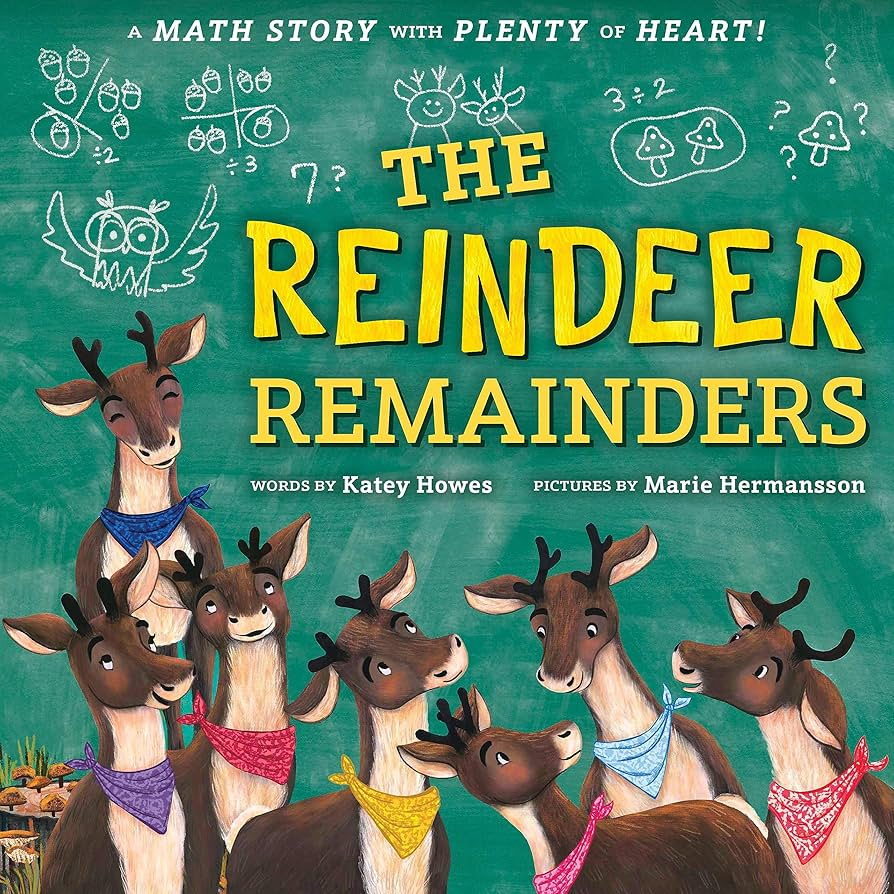
Book: The Reindeer Remainders
Author: Katey Howes
Illustrator: Marie Hermansson
Publisher / Year: Sourcebooks Explore, 2024
Genre: Fiction
Topics: Math Concepts, School, Inclusion, Belonging
Blurb: A class of a dozen reindeer is preparing for the big showcase night event when a new student arrives. This isn’t a big deal until it’s time to divide in groups, and there’s a leftover reindeer every single time. How will the class make sure everyone feels included? And what will they learn in the process?
Book Word Count: about 430 words
Back Matter Word Count: about 370 words
Back Matter Sections:
1. Remainders and Primes (about 120 words)
To kick off the back matter, author Katey Howes, spends a page giving readers more explanation about the math concepts that are demonstrated in the story. In an earlier spread, the idea of prime numbers is introduced with illustrations doing most the heavy lifting for readers. Here, Marie Hermansson’s illustrations and kid friendly diagrams are placed alongside Howe’s explanations of remainders and prime numbers to ensure that the meaning will be clear to a range of ages. The section ends with the question, “Can you name any other prime numbers?” and kids should be able to answer based on the images and information provided.
2. When Someone Is Left Out (about 250 words)
The second page of the back matter switches gears to focus on the book’s other important theme of inclusion and belonging. Here Howes talks directly to readers to help them identify the feelings that can arise in someone who feels left out, and provides some tools to deal with those feelings. There are helpful solutions for kids to use when they are the one feeling left out, but Howes doesn’t end it there. She also makes sure to help kids build empathy and take action to help when they observe someone else being left out. Within this text, we get more illustrations of the book’s reindeer characters demonstrating these emotions and connecting readers back to the events of the story.
Takeaways: The mix of illustrations and text in the math section are a great way to ensure that readers of different age levels will be able to grasp the concepts. And the section on inclusion, has great questions and tips that will engage kids or lead into important conversations with the adults reading with them. When I look at these two pages side-by-side, it occurs to me that either one could have been decent back matter for this book on its own. But put them together, and you have back matter that is twice as good and lends itself to re-readability. Readers have choice about what topic they want to focus on and both can lead to interesting conversations with kids.
Tips: Try to make room in the back matter to cover all of different themes contained in your book! This will add to your re-readability factor and will be an extra selling point, especially if you are able to hit different disciplines.
Thank you for reading! Leave a comment to keep the conversation going or to suggest a book for future blog posts!
Don’t miss future posts! Subscribe to my blog:
 Judy Campbell-Smith