Welcome to the Back Matter Break Down! Today we get to enjoy this interview with author Annette Whipple! She has so much great information to share with us as she has tackled back matter in so many of her non-fiction books. We are in for a treat because she’s going to share about several of her books today. Let’s dive in!

How do you decide what information will end up in the back matter versus in the main text of your non-fiction picture books?
As I’m writing, I can’t include all the wonderful facts I find in the main text. I use the interesting facts that don’t fit and consider if they’d work as back matter. I also want to include a way for the reader to interact with the topic more, so I often include hands-on activities as well as additional resources to learn more.
Tell us about the back matter revision process. Why do changes occur? What contributions and changes come as a result of working with editors?
I love back matter, so the revision process often includes me writing lots and letting my editor know that it doesn’t all need to be included. In a picture book, it’s important to leave room in the page count for it. I try to envision what it might look like (with photographs and/or illustrations), but sometimes something needs to be removed.
In The Truth About series, there are a lot of photos used alongside the text with some illustrated and graphic elements. How does your back matter text look when you are ready to submit? Do you use illustration notes?
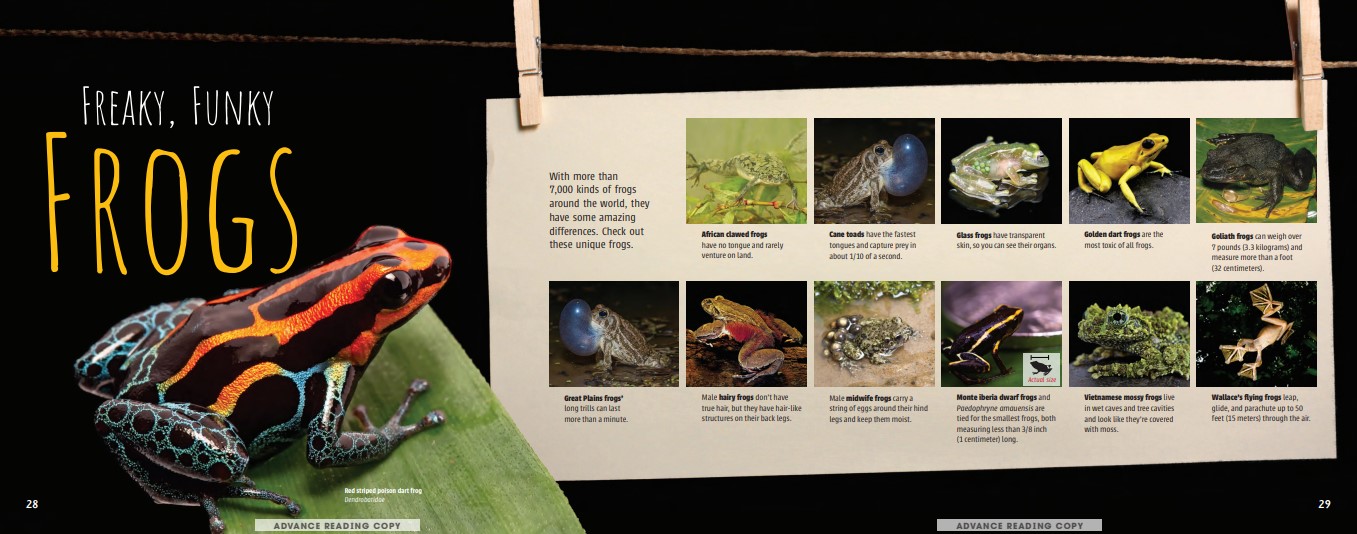
This series is beautifully designed. My illustration notes are fairly limited throughout the book, including the back matter. In the book Ribbit! The Truth About Frogs, I wanted to highlight cool frog species. I titled it “Freaky, Funky Frogs.” After a brief introduction, I wrote a sentence about each frog and what set it apart from others. At the end of this section of back matter, I included an illustration note. (My illustration notes are in gray text and brackets.)
[Design note: Insert appropriate photograph of each species.]
The 228 words I wrote became a two-page spread seen here.
Ribbit! The Truth About Frogs actually had eight pages of back matter (plus another page with my author bio and photo on it). That’s a lot for a picture book.

Is your back matter aimed for kid readers or adults? What do you hope readers will take away after reading your back matter content?
At this point, my back matter has always been aimed at the kid reader instead of the adult. I write it with the purpose of helping the reader immerse themselves in the topic even more.
How do you come up with the projects that appear in the back matter for The Truth About Series?
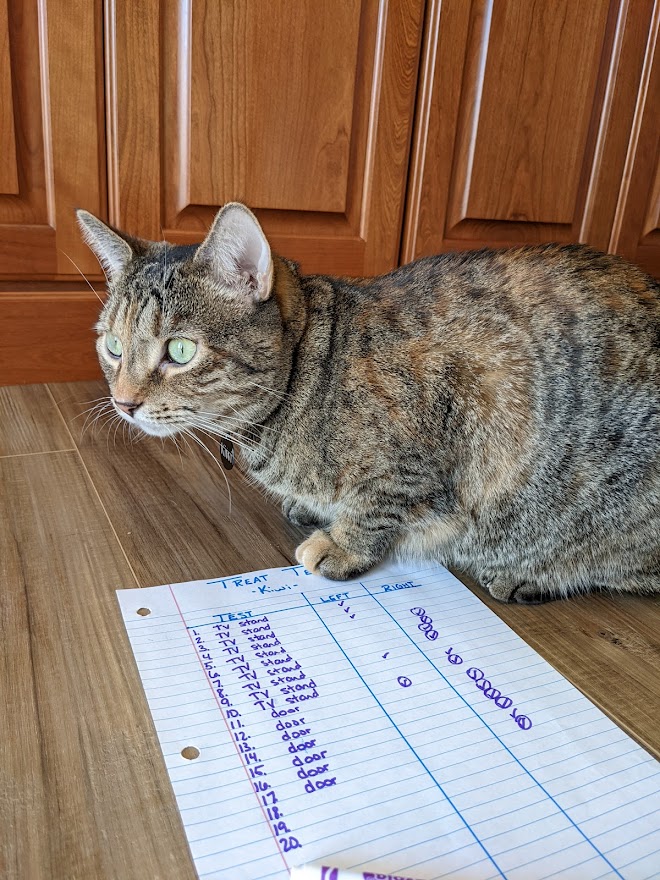
I was once a teacher, so I love coming up with hands-on ideas. I had a lot of trouble brainstorming a science-focused craft or activity for Meow! The Truth About Cats so I turned to Pinterest. There I found a great idea and made it my own. You wouldn’t believe how much fun it is learning if your cat is right-pawed or left-pawed!
What tips can you offer picture book writers for writing back matter?
Go beyond the bibliography/resources and glossary. Make the back matter something the reader will engage with. I have a whole blog post about back matter. https://www.annettewhipple.com/2022/01/writers-questions-about-back-matter.html
Are there resources or comp titles you can share that would be helpful for writer’s wanting to learn more about back matter?
I’ve heard some authors use my series, The Truth About, for inspiration. However, I think borrowing 25 recently published books from your local library is a great place to start.

Thank you, Annette! There’s so much good information here for anyone interested in back matter!
Please support Annette!
https://www.annettewhipple.com/ is full of resources for writers, both published and unpublished.

Follow Annette:
@AnnetteWhippleBooks on Instagram and Facebook
@AnnetteWhipple Twitter/X and Blusky
Thank you for reading!
Don’t miss future posts! Subscribe to my blog:
 Judy Campbell-Smith