Welcome to the Back Matter Break Down! Today I am so excited to share another interview with a debut author. Brandi-Ann Uyemura has a beautiful new picture book that is coming TODAY! And make sure you read the whole interview because all the details for the giveaway are at the bottom of the page. Let’s go!
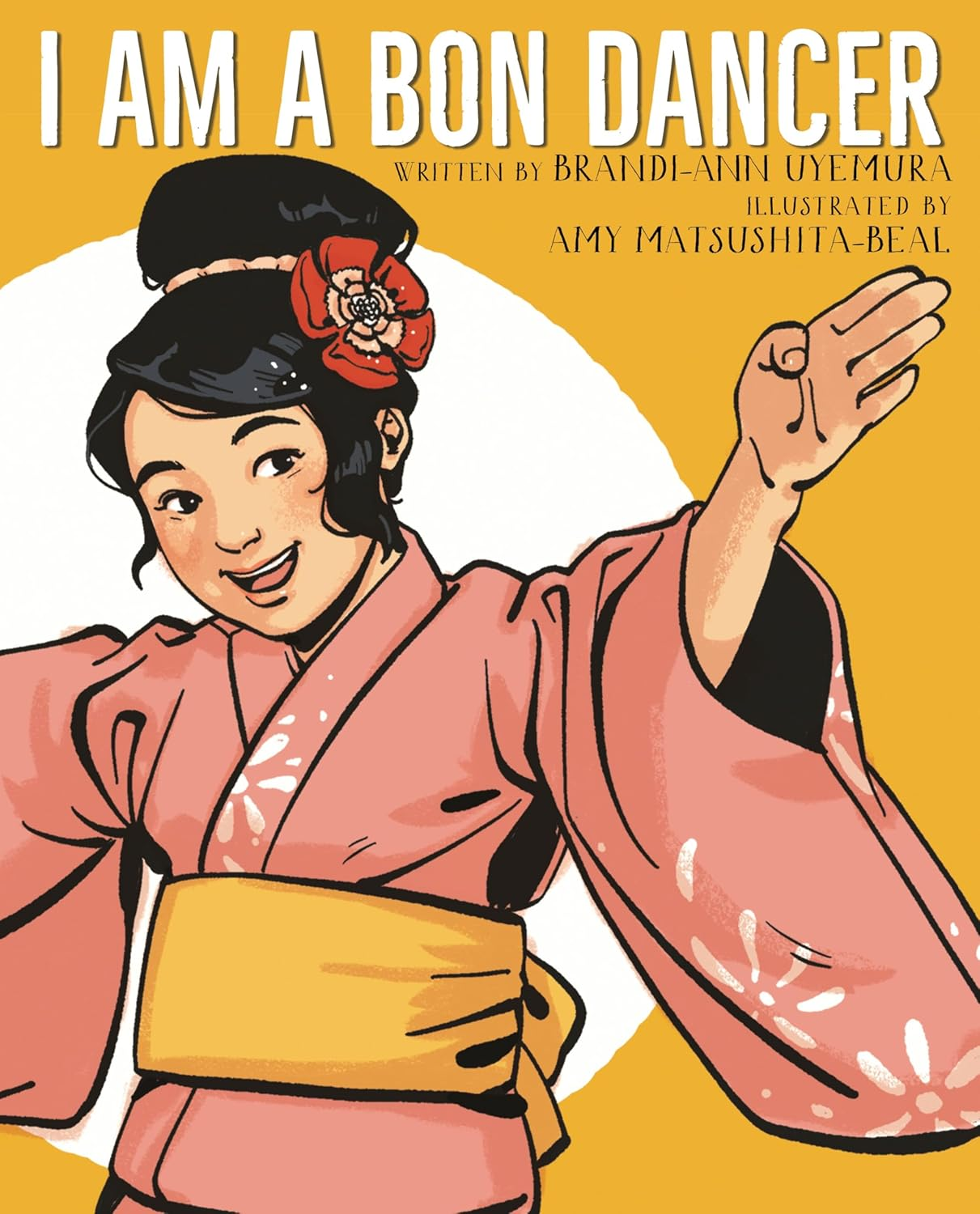
Book: I Am a Bon Dancer
Author: Brandi-Ann Uyemura
Illustrator: Amy Matsushita-Beal
Publisher / Year: Holiday House, 2026
Genre: Fiction
Topics: Dancing, Hawaiian Culture, Japanese Traditions, Asian American Festivals, Buddhism, Family
Blurb: It’s a young Japanese-American girl’s first time at the “Festival of Souls,” one of the largest Buddhist festivals. It’s just like her grandfather described: the smell of corndogs, the glow of hanging paper lanterns, the beat of taiko drums. But Grandpa Jo didn’t tell her that everyone else already knew how to dance! Suddenly, the lanterns feel like spotlights. She wish, wish, wishes she could dance, but she can’t bring herself to try… until Grandpa Jo encourages her to remember the meaning of the Obon Festival—celebrating our family members who have passed on—and to imagine her beloved Grandma Nat dancing along with her. Because she is there, and behind her are her parents, sugar-cane cutters, and behind them are their parents, who came to Hawai’I on ships from Japan…

What is your manuscript word count? What is your back matter word count?
623 manuscript word count. 599 back matter.
Tell us a bit about the inspiration for your story.
I have many years of memories of going to Bon Odori or Bon dance with my grandfather Wakamatsu Iwamoto on the island of Kauai when I was a child. The festival was a carnival for the senses. There was the smell of good food cooking like hotdogs and fried noodles, the sounds of the singers and taiko drums, and the lights from the lanterns. It was so memorable and my grandfather loved to go. So many years later, I couldn’t stop thinking about how joyful these memories were and I wanted to write them in a story especially for my sons since they never met him, and as I get older and appreciate these memories even more.
At what phase of the process did you decide your book needed back matter?
It was several years and revisions later. The back matter actually explains a lot about how I got to the heart of my story. Originally, it was in third person and was basically a nonfiction article depicting what exactly happened when I would go with my grandfather and three cousins to the festival, even down to the orange station wagon he drove and his unforgettable hair oil that he used. When I did research on Bon Odori and the Obon festival in totality, I realized there was an even deeper meaning behind the dance than I realized. This really helped me to fill in what was missing in my story from making it just about my family to a more universal theme of ancestors, family, and cultural connection.
What kind of research did you do for the back matter? How did you approach bringing together the many different cultural influences and long history that have shaped the Bon Odori?
I read books and articles and spoke to a Buddhist reverend. Sharing how Bon Odori originated as well as how it’s transformed over time was how I weaved culture and history into my story. It’s also shown in explaining the meaning behind some of the dance movements.
What changes and revisions (if any) came about after working with the editor/agent?
I think because I worked and reworked this story for ten years, I didn’t have many revisions. I think there was one pass, if I remember correctly, to change wording in a few lines.
Is there more information that you wanted to include in the back matter but didn’t make the cut?
Actually the back matter is a lot longer than I anticipated. I think it is complete as it is.
What do you hope readers will take away after reading your back matter content?
I hope they will either gain a deeper understanding of the festival than they knew already or learn about a Japanese cultural festival that they knew nothing about.
Are there resources you can share that would be helpful for anyone wanting to learn more about back matter? Are there any picture books you’d recommend for their back matter?
I list several references in the back of my book. A long time ago I read Jill Suzuki Haworth’s Bon Dance in Hawaii: Dance with the Wind and the Spirits. I enjoyed this book which was the first one I read about Bon dance. I really enjoyed reading it and am grateful that she wrote it. I really feel like I am standing on the shoulders of the local Hawai’i authors who wrote their stories before me. Although I haven’t taken it, I saw that Heidi E.Y. Stemple has an online course with 12×12 on sale now on back matter.
Thank you, Brandi! It is inspiring to see how you finally found the heart of this story by bringing together your family history with the cultural background. Please support Brandi-Ann Uyemura:
Website: Brandi-annuyemura.com
Instagram: @Brandialwayswrites
Bluesky: brandiauyemura.bsky.social

Now for the giveaway! Brandi has generously offered a copy of I Am a Bon Dancer (or signed bookplate if a book can’t be sent directly) to one lucky winner!
To enter: leave one comment on this blog post by April 3, 2026 at 11:59pm Pacific Time. For additional entries, leave a comment on my (Judy’s) BlueSky and/or Instagram posts about this post for a maximum of 2 bonus entries. (Remember to check back on this blog post and social media to see if you are selected as a winner!)
Thank you for reading!
Don’t miss future posts! Subscribe to my blog:













 Judy Campbell-Smith