Back Matter Break Down: Interview with Andrew Hacket

Welcome to the Back Matter Break Down! Today we will be looking at a lovely new book and hearing from the author about how back matter came together. Debut author Andrew Hacket will be joining us today on his blog tour and I’m so excited for you all to learn more about his book and his back matter journey! Let’s dive in!

Book: Ollie, the Acorn, and the Mighty Idea

Author: Andrew Hacket

Illustrator: Kaz Windness

Publishers / Year: Page Street Kids, 2024

Topics: Bullying, Social-Emotional Learning

Blurb: Ollie Alexander Kandersteen, successful amateur gardener, longs to be a tree: Strong. Tall. And mighty enough to stand up to Everett, the bully next door. Ollie is rather short for his age, and when things are too heavy or too high to reach, Everett is sure to point it out. Ollie wilts, he withers. Inside and out, he feels small. But when Everett, feeling jealous of Ollie’s gardening skills, steals Ollie’s sapling, an idea takes root…
“I couldn’t. I shouldn’t.”
But he does! Ollie SWALLOWS an acorn. He waits, wonders, and rumbles … Burp! With a little care and cultivation, a tree-mendous transformation begins! Ollie’s feet root, his arms branch, his locks leaf, and his limbs stretch to the clouds. He’s finally strong and tall enough to confront Everett. But when he does, he finds out that being the biggest doesn’t always mean you’re the mightiest and getting even with a bully might just make you feel smaller than ever.

Word Count: about 600 words

Back Matter Word Count: about 350 words

At what phase of the drafting/revising/publishing process did you decide your book needed back matter? 

I began drafting what would become Ollie in October of 2020. It wasn’t until May of 2021, after receiving a critique from Jolene Guiterrez, that she suggested back matter as an option. Up until this point I had received some concerned feedback that Ollie’s ingesting of non-food items could present a problem for some families. Jolene’s suggestion was the perfect suggestion to allow me to address this concern while keeping the story intact.

What kind of research did you do for the back matter?

My back matter serves as a big PSA encouraging readers not to copy Ollie’s action. I knew that just saying “Hey, don’t eat acorns!” wasn’t substantial enough to need back matter. What I had to do was consider what facts related to Ollie’s actions would be interesting and informative to the reader. For some parts, such as not eating acorns, I knew I wanted to give the why as well as share some information about who can eat them. For other aspects, such as drinking water, I needed to get a little more creative. This began in the form of brainstorming all of the possible related concepts I could explore. After that I began eliminating options based on whether or not I thought kids would find them interesting. With a smaller list in hand, I then began doing internet searches to find the specific facts from reputable sources that would complete the back matter.

What did the first draft of the back matter look like?

Surprisingly, the first draft to final copy of the back matter is almost exactly the same. We included a few additional sentences, but for the most part that first attempt was spot on. 

Your back matter uses 2nd person/direct address and continues the alliteration and wordplay found in the book’s main text. How did you arrive at this voice for the back matter? 

The voice came very naturally to me. I had spent so much time drafting and revising the main text, agonizing over each and every word, that by the time I got to the back matter I was ready to have some fun. I was so well-acquainted with the voice and tone from the picture book manuscript that writing similarly in the back matter just felt natural. The use of 2nd person was intentional as well. I wanted the child listener to feel these words/warnings were being spoken directly to them. I mostly wanted this because it welcomes the reader into feeling part of the story, but I also wanted the DO NOT EAT disclaimer to also feel like it was being spoken directly to them. 

Tell us about the back matter revision process. Why did changes occur? What changes and revisions came about after working with the editor/agent?

Funnily enough, after several back and forths with an R&R to get Ollie acquired, the back matter was barely touched. My incredible editor, Kayla Tostevin, had a few suggestions for clarity that we added in, but overall the revision process was quick and easy for this part.

What was the most challenging part of process of the back matter publishing process?

I am fortunate to say that the publishing part of the back matter was smooth sailing. 

What do you hope readers will take away after reading your back matter content? 

Ollie is a pretty weird book with loads of actions we did not want our readers to emulate. So my biggest hope is for kids to not start eating acorns and dirt because of me. Additionally, I wanted to give some fun related facts that piggybacked on the small underlying science content embedded within Ollie’s actions.

Reflecting on this process and what you learned, what tips (if any) can you offer picture book writers for writing back matter?

There are so many types of back matter for authors to investigate and study prior to jumping into writing their own. I recommend that authors explore these options and see what works for them and best compliments their story. 


Thank you, Andrew! I love that you took the concerns of your early readers and found a way to problem-solve with some clever and fun back matter!

Please support Andrew! Purchase signed copies of his books from Tidepool Bookshop:

Ollie, the Acorn, and the Mighty Idea https://www.tidepoolbookshop.com/book/9781645677888

Curlilocks & the Three Hares -https://www.tidepoolbookshop.com/book/9781956378184

Hope and the Sea -https://www.tidepoolbookshop.com/book/9781546005384

Follow Andrew on social media:

Website – https://www.andrewhacket.com/

X/Twitter – https://twitter.com/AndrewCHacket

Instagram – https://www.instagram.com/andrewchacket/

Facebook – https://www.facebook.com/AndrewCHacket

Now for a giveaway! Andrew has generously offered to give one lucky person a 30-minute AMA! To enter: Leave one comment on this blog post by April 16, 2024 at 11:59pm Pacific Time. A winner will be chosen at random and notified on April 17, 2024. One entry per person.

UPDATE: The giveaway is now closed. Congrats, brilawyer! You are the winner!

Thank you for reading!

Don’t miss future posts! Subscribe to my blog:
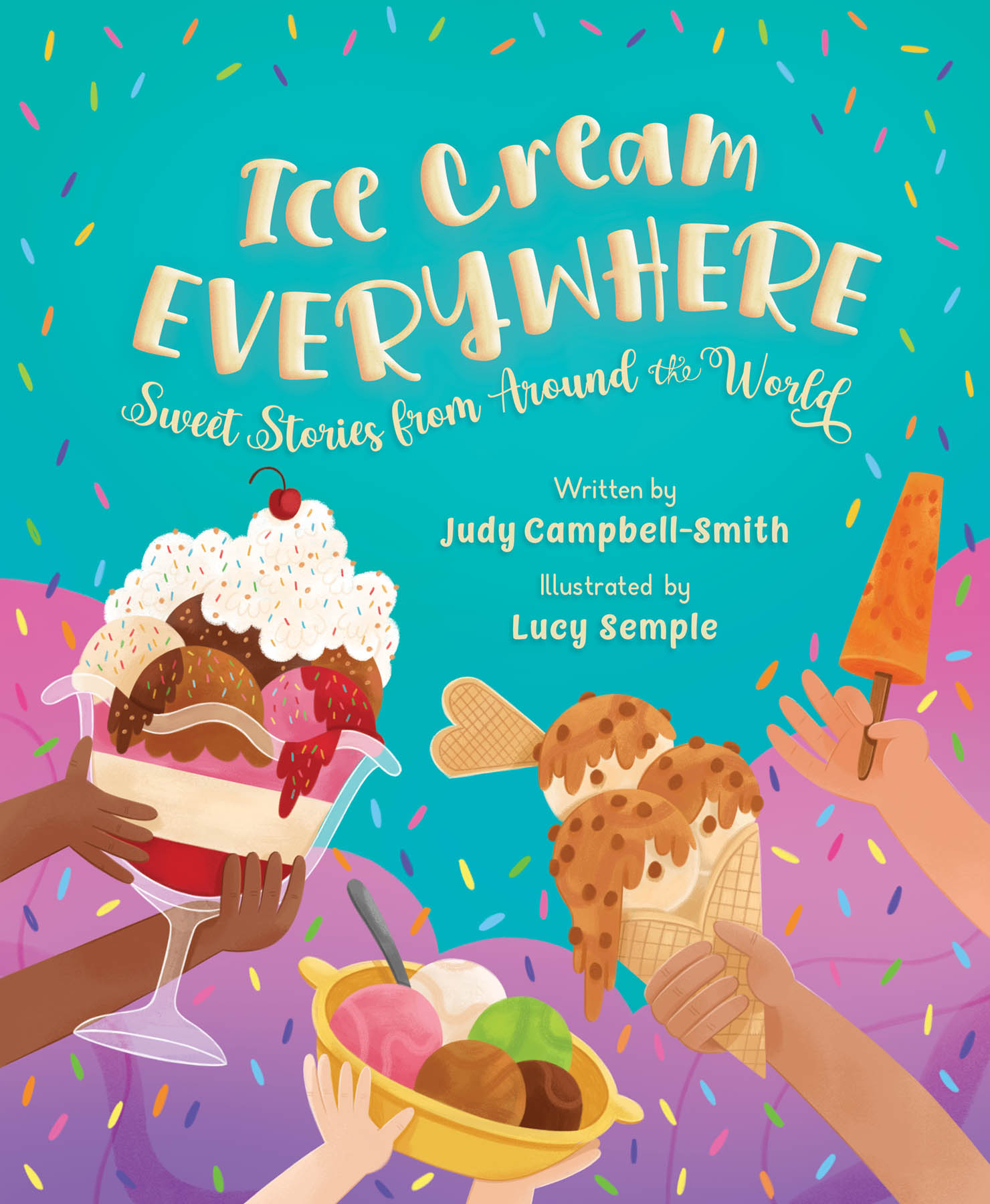
Back Matter Break Down: Ice Cream Everywhere

Welcome to the Back Matter Break Down! I am SUPER excited because today I get to share all about back matter in my very own book! I am going to use the same format I use for my other author interviews so this blog series can remain a useful resource. I hope you enjoy learning a bit more about the journey I went on with this book. And stay to the end for a giveaway! Let’s dive in!

Book: Ice Cream Everywhere: Sweet Stories from Around the World

Author: Judy Campbell-Smith (it’s me!)

Illustrator: Lucy Semple

Publisher / Year: Sleeping Bear Press, 2023

Topics: Ice Cream, Geography, Food

Blurb: Everywhere you go, all around the world people are eating ice cream! And while some folks spoon up sundaes and some savor Syrian bouza–one thing is always true: ice cream is joy! Travel the globe and discover a mouthwatering selection of cold, creamy treats. Which one is your favorite?! Ice Cream Everywhere includes a map, an author’s note–and three scoops of fun!

Word Count: 1300

Back matter word count: 275

Back Matter Sections:

1. Map (47 words): In which I wrap up the theme of joy in the book along with an illustrated map showing the countries where each of the book’s ice cream treats.

2. Author’s Note (108 words): In my author’s note, I explain how my time spent in New Zealand eating ice cream and gelato provided the inspiration for this book. I also add that living in Southern California gave me many opportunities to try out the treats mentioned in the book as part of my research. Lucy Semple framed my note in the center of a delightful scene of the books characters sharing an ice cream picnic together.

3. What’s the Difference? (120 words): On this page, I briefly explain the differences between ice cream, gelato, kulfi, Turkish Maraş and Syrian bouza. Again, Lucy Semple added illustrations of each treat to accompany the explanations.

At what phase of the drafting/revising/publishing process did I decide my book needed back matter?

Once I figured out what the structure of the book would be and I finally had a full draft (which took a looooong time), I knew there would be back matter with the book. It just made sense considering how much information was packed into the book and fit in with other books of the genre.

What did the first draft of the back matter look like?

The first draft of the back matter consisted of an attempt at a glossary of terms found in the book and a note showing the difference between ice cream versus gelato. I say “attempt” because it was very messy in the first draft. I also had a list of selected resources which stuck around for quite a while in subsequent drafts.

Why did changes occur? What changes and revisions came about after working with the editor/agent?

The idea of a glossary went by the wayside during my own revision process. A glossary didn’t seem necessary after I pivoted to including factual sidebars to go alongside the fictional stories about each country and ice cream treat.

The version that I queried with and ended up submitting to editors had the “What’s the Difference?” section now expanded to also include kulfi, bouza, and Maraş. It also still had a bibliography of resources and a list of ice cream themed picture books for further reading. When I started working with Sarah Rockett, my editor at Sleeping Bear Press, she recommended removing the resources and the further reading elements with the idea they could be used in in additional materials or teacher guides. I was thrilled when Sarah suggested we add an illustrated map in the back matter. I hadn’t considered that before it was a perfect addition for this book. My first book, AJ’s Neighborhood, features a map at the end, so I thought it was cool that maps can be part of my author brand.

At this point I requested that we add a short author’s note to the back matter because I wanted to give readers a little bit about how my own travels provided the inspiration for the book.

Is my back matter aimed at kid readers or adults? What do I hope readers will take away after reading your back matter content?

I think my back matter is really more aimed at kid readers. I know lots of kids like exploring maps and I tried to keep the text in the back matter short so kids would not be intimidated to keep reading. I hope readers will come away with a growing curiosity about other countries and be inspired to explore new foods.

Reflecting on this process and what you learned, what tips can you offer picture book writers for writing back matter?

My tip for picture book writers is to look at your mentor texts and books in your genre to start thinking about your own back matter. My mentor texts had back matter but also sidebar facts which is what got me thinking about what info would be better used within my spreads and what info should stay in the back matter. From there, think about what else you could add to your back matter–get creative!

Are there resources to share that would be helpful for writer’s wanting to learn more about back matter?

When I was putting this manuscript together, the blog posts at Nonfiction Fest were very helpful. Yes, they focus on nonfiction specifically but there is a lot of great content for dealing with factual presentations in picture books. The Nonfiction Fest blog posts were very helpful to me for a lot of things.


Thank you so much for reading post about my book!

Purchase Ice Cream Everywhere: Sweet Stories from Around the World

Say hi to me on Twitter: @J_CampbellSmith

Say hi to me on Instagram: @judycampbellsmith

Follow @PBBuds24 on Instagram and Twitter to learn more about amazing books coming out this year!

Join our community at PB Power Hour!

Time for a giveaway! I would like to offer 1 lucky winner their choice of either A) a 30 minute Ask-Me-Anything zoom chat (to talk about writing, publishing, back matter, etc) or B) a FREE 30-minute max Virtual School Visit (for yourself or gift to a teacher of your choice). To enter, leave a comment on the blog post by 11:59pm PT on March 25, 2024. One entry per person.

Update: The giveaway is now closed. Congrats to Donna – you are the winner!

Thanks for reading!

Don’t miss future posts! Subscribe to my blog:


Back Matter Break Down: Interview with Annette Whipple

Welcome to the Back Matter Break Down! Today we get to enjoy this interview with author Annette Whipple! She has so much great information to share with us as she has tackled back matter in so many of her non-fiction books. We are in for a treat because she’s going to share about several of her books today. Let’s dive in!

How do you decide what information will end up in the back matter versus in the main text of your non-fiction picture books?

As I’m writing, I can’t include all the wonderful facts I find in the main text. I use the interesting facts that don’t fit and consider if they’d work as back matter. I also want to include a way for the reader to interact with the topic more, so I often include hands-on activities as well as additional resources to learn more.

Tell us about the back matter revision process. Why do changes occur? What contributions and changes come as a result of working with editors?

I love back matter, so the revision process often includes me writing lots and letting my editor know that it doesn’t all need to be included. In a picture book, it’s important to leave room in the page count for it. I try to envision what it might look like (with photographs and/or illustrations), but sometimes something needs to be removed.

In The Truth About series, there are a lot of photos used alongside the text with some illustrated and graphic elements. How does your back matter text look when you are ready to submit? Do you use illustration notes?

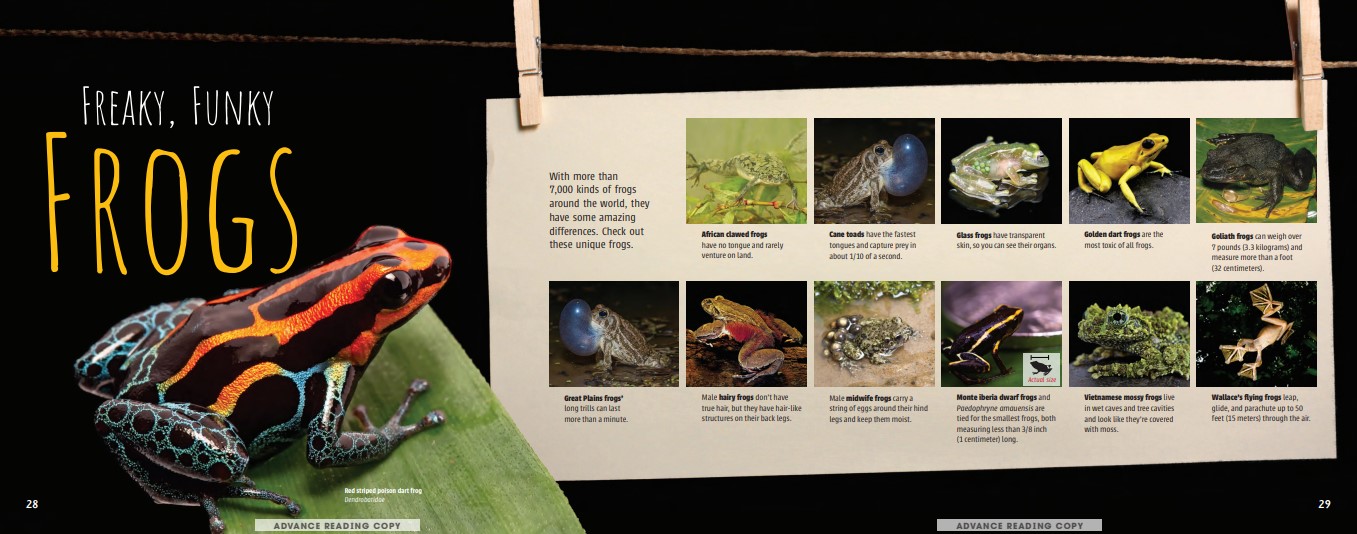
This series is beautifully designed. My illustration notes are fairly limited throughout the book, including the back matter. In the book Ribbit! The Truth About Frogs, I wanted to highlight cool frog species. I titled it “Freaky, Funky Frogs.” After a brief introduction, I wrote a sentence about each frog and what set it apart from others. At the end of this section of back matter, I included an illustration note. (My illustration notes are in gray text and brackets.)

The 228 words I wrote became a two-page spread seen here.

Ribbit! The Truth About Frogs actually had eight pages of back matter (plus another page with my author bio and photo on it). That’s a lot for a picture book.

Is your back matter aimed for kid readers or adults? What do you hope readers will take away after reading your back matter content?

At this point, my back matter has always been aimed at the kid reader instead of the adult. I write it with the purpose of helping the reader immerse themselves in the topic even more.

How do you come up with the projects that appear in the back matter for The Truth About Series? 

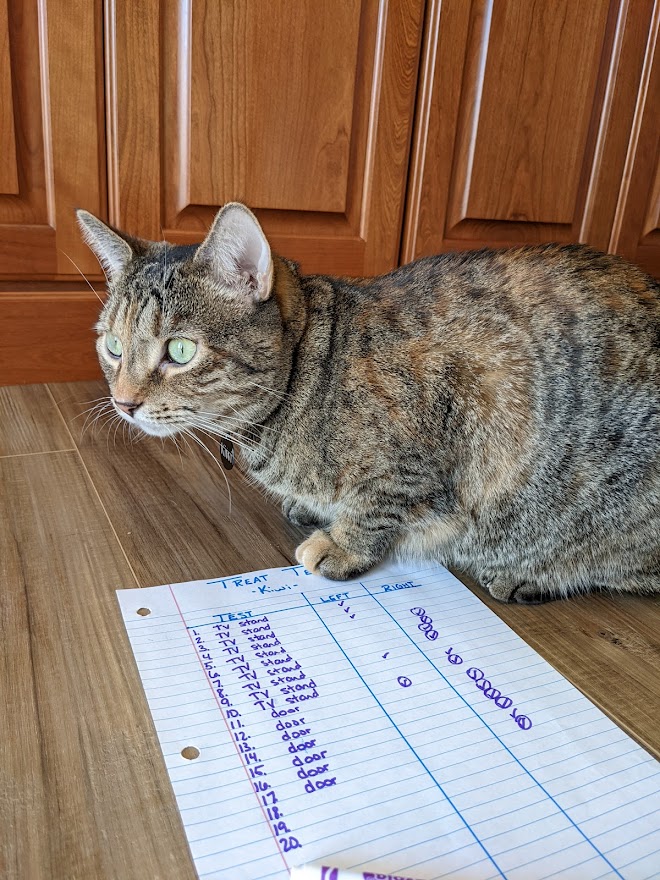
I was once a teacher, so I love coming up with hands-on ideas. I had a lot of trouble brainstorming a science-focused craft or activity for Meow! The Truth About Cats so I turned to Pinterest. There I found a great idea and made it my own. You wouldn’t believe how much fun it is learning if your cat is right-pawed or left-pawed!

What tips can you offer picture book writers for writing back matter?

Go beyond the bibliography/resources and glossary. Make the back matter something the reader will engage with. I have a whole blog post about back matter. https://www.annettewhipple.com/2022/01/writers-questions-about-back-matter.html

Are there resources or comp titles you can share that would be helpful for writer’s wanting to learn more about back matter? 

I’ve heard some authors use my series, The Truth About, for inspiration. However, I think borrowing 25 recently published books from your local library is a great place to start.  


Thank you, Annette! There’s so much good information here for anyone interested in back matter!

Please support Annette!

https://www.annettewhipple.com/ is full of resources for writers, both published and unpublished.

Follow Annette:

@AnnetteWhippleBooks on Instagram and Facebook

@AnnetteWhipple Twitter/X and Blusky

Thank you for reading!

Don’t miss future posts! Subscribe to my blog:

Back Matter Break Down: Interview with Lindsay Farley

Welcome to the Back Matter Break Down! Today, I am happy to bring an interview with Lindsay Farley! Her book is unique in so many ways as it brings together sports and social-emotional learning, plus math in the back matter! I’m excited for you all to learn more about her journey, so let’s go!

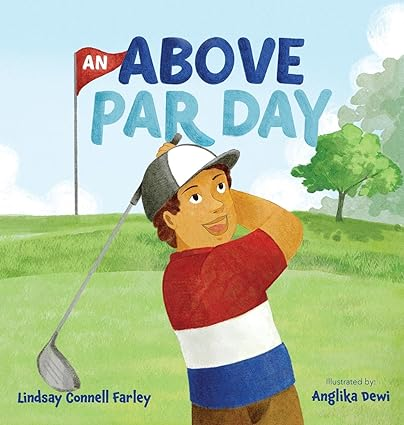
Book: An Above Par Day

Author: Lindsay Farley

Illustrator: Anglika Dewi

Publisher / Year: Kiddywink Crew, 2023

Topics: Golf, Sports, Social-Emotional

Blurb: Does practice really make perfect? And is perfect really what it’s all about? An Above Par Day is an engaging and relatable story about a boy, Liam, who thinks he will be as good as the pros when he goes out on a real golf course. Liam’s frustration gets in the way of enjoying his family golf outing. Will he be able to turn his attitude around and make some memories with his sister and parents?

Word Count: 762

Back matter word count: 309

At what phase of the drafting/revising/publishing process did you decide to add back matter in your book? 

I think I always knew I would add some type of back matter. But I was all over the place with what I wanted it to be for a while! In the very beginning stages I wanted to include a “board game” in the back. Then I went back and forth about adding in more information about the actual game of golf (i.e. explain par, bogie, etc). I also thought about having readers figure out the scores throughout the book, but I felt that took away from the storyline.  

I ended up adding in the back matter right at the end, right before it was published. After what I thought was the final read through, I felt like it didn’t showcase the math in golf as much as I wanted it to. I didn’t want to interrupt the actual story with too much math, so back matter felt like the perfect place for it.  

What did the first draft of the back matter look like? Can you show us snippets?

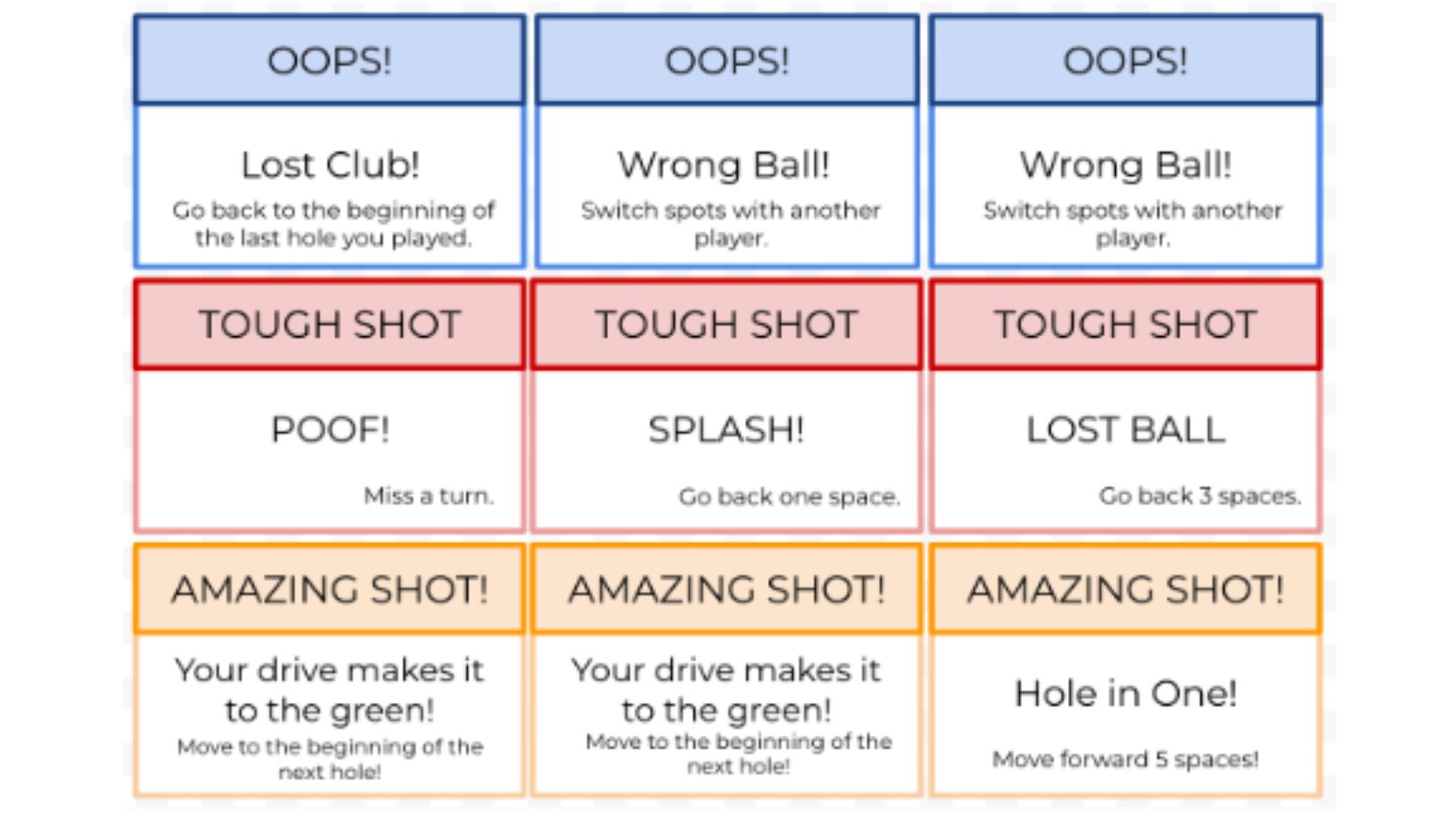
The very first draft of the back matter was a board game. Here are pictures of what I had initially envisioned. I had the thought that you would go to my website to download and print the cards (a few of the cards are pictured here), but then I thought maybe it would be better to bring this game and activities to visits instead of having them in the book.

Tell us about the back matter revision process. Why did changes occur? 

Initially I was publishing this book on my own. And then, in a twist of fate, I met my now business partner, Julianna Bria. We created Kiddywink Crew together, and this book was published as part of our kids entertainment company.  

A big part of what we do with Kiddywink Crew is promote the importance of conversations between kids and adults. That helped me think about the back matter differently. That’s a big part of why I changed it to questions for kids and adults to talk about from the book.

Is your back matter aimed for kid readers or adults? What do you hope readers will take away after reading your back matter content?

It’s aimed at parents and kids so they can talk about the math in the book.  I hope kids and adults see the math throughout the story, and use some of the questions to inspire questions they can ask their children the next time they play golf!

Have you heard back from any readers about how they are using the Math Connections? 

I’ve heard from a few teacher friends that they’ve used it with their classes! As a parent, I totally get why it might be hard to use with your kids, especially when you are reading at night and are ready for it to be bedtime! But I do hope that more people refer back to the questions as they reread the book!

Reflecting on this process and what you learned, what tips (if any) can you offer picture book writers for writing back matter? 

I think my biggest tip would be to wait until you’ve finished the manuscript.  It might even be best to wait until it’s illustrated too. I think you figure out the best back matter for your book once it’s as final as possible.  


Thank you, Lindsay! It’s so interesting to see your thought process! Hopefully it will help other authors as they are problem-solving their own back matter.

Please support Lindsay!

You can purchase copies of An Above Par Day here: https://www.kiddywinkcrew.com/shop

Find Kiddywink Crew on Instagram and Pinterest

Listen to Kiddywink Crew podcast on any podcast platform! https://podcasts.apple.com/au/podcast/kiddywink-crew-podcast/id1691379364

Now for the giveaway! Here is Lindsay’s generous offer: We have kids as guests on our Kiddywink Crew podcast. I would like to offer up a kid spot on our podcast for a lucky winner! Best for kids ages 4 – 10. To enter: Leave one comment on this blog post by February 26, 2024 at 11:59pm PT. A winner will be chosen at random and notified on February 27, 2024. One entry per person!

UPDATE: The giveaway is now closed.

Thank you for reading!

Don’t miss future posts! Subscribe to my blog!

Back Matter Break Down: Interview with Razeena Omar Gutta

Welcome to the Back Matter Break Down! Today, we are all in for a treat! I’m bringing you an interview with author Razeena Omar Gutta to talk about the back matter in her debut, Hana’s Hundreds of Hijabs. The back matter in this book is informative, fun and really unique–but also a perfect addition to this story about creativity and culture! Let’s dive in!

Book: Hana’s Hundreds of Hijabs

Author: Razeena Omar Gutta

Illustrator: Manal Mirza

Publisher / Year: Barefoot Books, 2022

Topics: Fashion, Creativity, Muslim Culture

Blurb: “Hana has a humongous collection of hijabs and accessories – and her hijab is always styled superbly. But when her overflowing collection gets a little out of hand, Hana knows something needs to be done . . . and comes up with a clever plan for sharing her talents and possessions with her community! Young makers will chuckle along with this humorous tale of creative problem-solving and learning to help others.”

Word Count: 524

Back matter word count? Around 300 words

At what part of the writing/revising/publishing process did you start working on your back matter?

Once most of the editing of the manuscript was done, and the illustrations were well underway giving us a good feel for the book, we started looking at ideas for back matter. There were a few things not reflected in the manuscript that I needed to clarify and explain in the back matter, and we had also been given some great feedback by beta readers within Barefoot Books that made us realise we needed some further explanation.

How did working with an agent or editor affect your back matter?

Being my very first traditionally published picture book, and first time working with an editor, it was great to have some guidance on the matter. We discussed a few options and then decided on the interview style.

Why did you decide to do a greeting in the voice of your main character to explain more about hijabs instead of a more typical author’s note or fact box?

Hana is such a vibrant character and the way she’s illustrated by Manal made her a character that I felt kids would just resonate with. By the end of the book, we just loved her personality (and readers have said the same) and so it was just natural that she should flow on into the back matter.

How did the interview section come about? Was that your idea or the editor? Who came up with questions? 

The interview was my idea, and I came up with the questions, but it was after some prompting from my editor that it would be great to make the back matter a bit creative. Also, hijab is something personal – and since Manal and I are both hijab wearing Muslim women, I felt it was a good way to get our own points of view across and our own journeys too. In a world that doesn’t always understand hijabs, or the choices Muslim women make, it was a good opportunity for us to speak up and make our views heard.

Did any other books help inspire your back matter content?

I can’t say that they did. We wanted it to be unique.

What do you hope readers will get from your back matter content? Is your back matter aimed for kid readers, adults or both?

It’s definitely aimed at both. I think Muslim kids really resonate with our interview answers, and it helps non-Muslim adult readers explain the hijab to non-Muslim kids in a way that accessible and authentic to our experiences.

I hope Muslim girls in particular will feel inspired and confident in the choices they make once they’re older, with regard to the hijab. And I hope non-Muslim readers close the book with a better understanding and appreciation for Muslim women and girls.

What advice do you have for any picture book writers who are working on their back matter?

Keep the back matter authentic and true to yourself and the book. If there’s a strong connection between yourself and the story, it would really enhance the experience of the book if you’re comfortable to share that. But also, only share what’s comfortable to you. Make it concise and accessible to readers in creative ways does help readers connect with the book. We have had many compliments on the back matter of our book.

What picture book with excellent back matter would you recommend to writers who want to study a good example?

I do love the back matter of Halal Hot Dogs by Susannah Aziz because we get to see the author’s family pictures and learn more about her. I also really loved The Night Before Eid by Aya Khalil for the same reason.


Thank you, Razeena! I think you will inspire other authors to explore new and creative options in their back matter…and I think Hana would approve!

Please support Razeena!

Follow me on Instagram @razeenareads where I share books for all ages.

Purchase copies of Hana’s Hundreds of Hijabs: https://www.barefootbooks.com/hanas-hundreds-of-hijabs

Purchase Maymoona’s Moon: https://www.hardiegrant.com.au/au/publishing/bookfinder/book/maymoona_s-moon-by-razeena-omar-gutta/9781761211898

Thank you for reading!

Don’t miss future posts! Subscribe to my blog:

Back Matter Break Down: Work: An Occupational ABC

Welcome to another Back Matter Break Down, where I examine back matter in picture books! Today I want to look at one of my favorite ABC books filled with amazing artwork, but also a bit of a surprise for readers in the back matter. Let’s take a look!

Book: WORK: AN OCCUPATIONAL ABC

Author/Illustrator: Kellen Hatanaka

Publisher / Year: Groundwood Books, 2014

Genre: Non-Fiction

Topics: Alphabet, Occupations, Concept Book

Blurb: An alphabetical tour through the coolest jobs you can imagine―and some you might never have heard of! With a sophisticated, minimalist design and visual jokes to interpret on every page, Work: An Occupational ABC introduces children both to the alphabet and to a range of alternative careers.

The ideal reader for this book is the child (or adult) who is interested in exploring all manner of professions through original and inspired illustrations. Must be open to adventure. Knowledge of the alphabet is desirable but not required, since successful applicants will receive training from A to Z.

Book Word Count: ~33

Back Matter Word Count: ~400

Back Matter Sections:

1. “Want Ads” – a 2-page spread glossary of the terms featured in the book

After the fun and surprising occupations listed in this ABC book, author-illustrator Kellen Hatanaka keeps the fun going in the back matter. Each term is listed as if it were a classifieds ad for the job described. The descriptions are only a sentence or two, but are filled with puns and jokes that lend even more humor to the section for older readers. At the same time, younger readers will still get more information about the terms that they’ve encountered in the book. Here are some of my favorite examples from the glossary:

“RINGMASTER: From organizing clowns to announcing acrobats, this job is a real balancing act.”

“UMPIRE: If you’re the type of person who likes to have the final say, being an umpire might fit like a glove.”

See! So fun!

Another cool detail about the glossary is that the color of the listed word matches the color used for the letter in the book. It’s a subtle detail that reinforces the connection between the back matter and the main text.

Takeaways: With humor and a cohesive design aesthetic, readers won’t skip the glossary in Work: An Occupational ABC. Clearly not an afterthought, author-illustrator Kellen Hatanaka turns what could have been simple list of definitions into bonus content that readers of all ages can enjoy.

Tips: If you’re considering adding a glossary to your back matter, think about adding some humor! Whether it’s puns or jokes, present your information in fun way that makes readers want to dig in. And think about how design elements can be used in the back matter that can act as call-backs to your main text.

Thank you for reading! Please leave a comment to add to the conversation or suggest a book for a future blog post!

Don’t miss future posts! Subscribe to my blog!

Back Matter Break Down: Interview with Brentom Jackson

Welcome to the Back Matter Break Down! I am so glad to bring you an interview today with Brentom Jackson, a debut author whose picture book brings together Easter, creativity, fashion, Black history, and faith traditions all in one delightful package. Enjoy this interview, but make sure to stay all the way to then for details on a how to win a free, signed copy of Elijah’s Easter Suit! Let’s go!

Book: Elijah’s Easter Suit

Author: Brentom Jackson

Illustrator: Emmanuel Boateng

Publisher / Year: Doubleday Books for Young Readers, 2024

Genre: Fiction

Topics: Easter, Fashion, Black History

Blurb: “Elijah is on a mission to find the perfect church outfit for Easter. But when failed attempts at his town’s stores leave Elijah disappointed, an important conversation with Deacon Brown and Mother Green about tradition, culture, and clothing gives him the courage to create his own Easter masterpiece: a patchwork of perfection that tells his story with style.”

What is your manuscript word count? What is your back matter word count? 

My manuscript word count is 539. The backmatter word count is 504.

At what phase of the drafting/revising/publishing process did you decide your book needed back matter?  

Back matter came as a suggestion from my editor. During the pagination process we realized some of the historical information that I wanted to convey in the story interrupted the rhythm of the text. Using more creative ways to express these thoughts in the manuscript and using back matter to provide more in depth information was our solution. 

What kind of research did you do for the back matter? 

Autobiographies served as primary sources and scholarly articles were secondary sources. I also spent a lot of time reading fashion magazines and looking at old advertisements/catalogs, etc. 

What did the first draft of the back matter look like? Can you show us snippets? 

Ha! My first draft of back matter was simply a list of research and sources I’d gathered during the manuscript writing process. I sent that to my editor and she was like, “Um…this is great. Now let’s turn it into back matter.”

Tell us about the back matter revision process. Why did changes occur? What changes and revisions came about after working with the editor/agent?  

I worked to turn that list into actual back matter with the help of my editor.  My biggest challenge was defining such serious topics (enslavement, African Diaspora, segregation, and Jim Crow laws) for young readers. After that the copy editor took over and provided much needed help with the grammar, punctuation and citation. 

What was the process for selecting and securing the rights to publish the photos that appear in your back matter? 

My back matter centered upon one particular photo: “Negro boys on Easter morning. Southside, Chicago, Illinois 1941” by Russell Lee. This photo was one of my biggest inspirations for writing the book. I would have been happy if only that photo was included in the back matter. However, my publisher was able to secure other images from that photo essay.  

Is your back matter aimed for kid readers or adults? What do you hope readers will take away after reading your back matter content? 

There is a biographical portion of the back matter that I aimed at parents. I wanted them to feel that sense of nostalgia I enjoyed while writing this book. The photos in the back matter are aimed at grandparents and history enthusiasts. I wanted them to see those images and be reminded about this time in our history. The more informational content is aimed at kid readers. I wanted to convey the same lesson that community members in the story impart to Elijah about the tradition of Sunday’s Best, with a little more historical context. 

Reflecting on this process and what you learned, what tips can you offer picture book writers for writing back matter?

Save all the things you come across while researching during the manuscript writing process. During the revision process: constantly repeat the phrase “There is always back matter!” This will help you kill your darlings more effectively. 

Are there resources or comp titles you can share that would be helpful for writer’s wanting to learn more about back matter?  

The 12×12 Community page Backmatter Matters was a great resource. Always turn to your editor, critique partners and mentors who have experience with back matter. 


Thank you, Brentom! It was fascinating to read how your back matter grew from a list of sources into the compelling material that it became!

Please support Brentom! Follow him – @brentomjackson on all social media

Purchase copies of Elijah’s Easter Suit! https://www.penguinrandomhouse.com/books/722293/elijahs-easter-suit-by-brentom-jackson-illustrated-by-emmanuel-boateng/

Now for the giveaway! Brentom has generously offered to give one lucky person a signed copy of Elijah’s Easter Suit! To enter: Leave one comment on this blog post by February 6, 2024 at 11:59pm Pacific Time. A winner will be chosen at random and notified on February 7, 2024. One entry per person!

Update: The giveaway is now closed. Congrats to Lisa–you are the winner!

Thank you for reading!

Don’t miss future posts! Subscribe to my blog!

Back Matter Break Down: Interview with Jessica Whipple

Welcome to the Back Matter Break Down! I’m excited to bring you a really insightful interview with author Jessica Whipple, author of Enough Is… and I Think I Think A Lot. You’re going to love getting a peek at the behind-the-scenes process of writing the back matter for her latest book. Jessica is also giving away a 30-minute Brain Picking Session via Zoom, so make sure you read to the end of the post to find details on how to enter. Let’s dive in!

Book: I THINK I THINK A LOT

Author: Jessica Whipple

Illustrator: Josee Bisaillon

Publisher / Year: Free Spirit Publishing, 2023

Genre: Fiction

Topics: Social-Emotional, Mental Health

Blurb: “I think. I think a lot. I think I think a lot. More than most other kids.” A young girl notices and wonders about the ways she and her classmates approach doing good work, caring about people’s feelings, and showing they’re grateful. She comes to accept herself just as she is and celebrates the differences between herself and her classmates. “I care a lot. Not more than other kids, just in my own way.” Inspired by the author’s experience with obsessive-compulsive disorder (OCD), I Think I Think a Lot can be a starting point for discussions about overthinking or obsessive thought and about the many ways individuals see and experience the world. The neurodivergent main character allows readers to see themselves and others in the story and emphasizes self-acceptance in the face of comparison.

What is your manuscript word count? What is your back matter word count?

JW: I had to look back! Word count is about 500 for the story text and the back matter is about 850 words, perhaps more.

At what phase of the drafting/revising/publishing process for I Think I Think a Lot did you decide your book needed back matter?

JW: My book proposal to Free Spirit with back matter included. (Free Spirit requires a full book proposal with writing credits, a market analysis, and thorough comparative title research included.)

What did the first draft of the back matter look like?

JW: When I made the book proposal, the back matter was simply an author’s note of perhaps two paragraphs plus a few non-specific online OCD resources.

Tell us about the back matter revision process. How did editor/agent input cause changes, if any? How did you get to the final version we see in the book?

JW: Free Spirit wanted to include discussion questions–it’s one of their trademarks, so to speak. So I worked with the editor to write relevant questions that satisfied her requests and my own hopes for the book. Lastly, rather than a list of resources, we included a note about OCD including a definition and how to contact the International OCD Foundation online. So it was even better than my proposed list of resources.

Did you feel any concern or hesitancy about talking about your own OCD experiences in the back matter?

JW: No hesitancy, however the question was how to limit the many facets of my complicated experience having OCD. But the book already focuses on just one aspect of my experience, so that helped me focus my author’s note.

Reflecting on this process and what you learned, what tips can you offer picture book writers for writing back matter?

JW: One thing that comes to mind is to let yourself feel free to be your authentic self.


Thank you, Jessica! I love the advice you left us all with and appreciate you letting us see a bit of the process you went through to bring this back matter together!

Please support Jessica! You can purchase I Think I Think A Lot and Enough Is… wherever books are sold and she asks that you please consider your local independent bookseller.

Signed copies here: AuthorJessicaWhipple.com/books

Follow Jessica Whipple: @JessicaWhippl17 on Instagram and X/Twitter. She’d love to connect there!

Now for the GIVEAWAY! Jessica has generously offered a 30-minute Brain Picking Session via Zoom to one lucky person! To enter: Leave one comment on this blog post by January 23, 2024 at 11:59pm Pacific Time. A winner will be chosen at random and notified on January 24, 2024. One entry per person!

***** EDIT: The giveaway has now closed! Congrats to Kate R! ****

Thank you for reading!

Don’t miss future posts! Subscribe to my blog!

Back Matter Break Down: Jimi: Sounds Like A Rainbow

Welcome to another edition of Back Matter Break Down! Today’s post features a book with unique and fascinating back matter that I have remembered and thought about often in the years since I first read it. Let’s dive in!

Book cover of Jimi: Sounds Like a Rainbow, which features art work of young Jimi Hendrix playing a white guitar

Book: JIMI: SOUNDS LIKE A RAINBOW

Author: Gary Golio

Illustrator: Javaka Steptoe

Publisher / Year: Clarion Books, 2010

Genre: Non Fiction

Topics: Biography, Music, Musicians

Blurb: “Jimi Hendrix was many things: a superstar, a rebel, a hero, an innovator. But first, he was a boy named Jimmy who loved to draw and paint and listen to records. A boy who played air guitar with a broomstick and longed for a real guitar of his own. A boy who asked himself a question: Could someone paint pictures with sound?
This a story of a talented child who learns to see, hear, and interpret the world around him in his own unique way. It is also a story of a determined kid with a vision, who worked hard to become a devoted and masterful artist. Jimi Hendrix–a groundbreaking performer whose music shook the very foundations of rock ‘n’ roll.”

Book Word Count: 1740

Back Matter Word Count: 1150 words plus references

Back Matter Sections:

1. “More About Jimi Hendrix” – 2-page spread biography written by the author (about 550 words)

In this section, we read a more comprehensive biography of Jimi Hendrix with Gary Golio skipping over the childhood years that are the focus of the book’s narrative. We get a few paragraphs that take us through music career and achievements before switching to an examination of his cultural context. Golio references contemporary figures (like Bob Dylan and Martin Luther King Jr.) and events (the Civil Rights Movement) that were significant to Hendrix’s music and point of view. Finally, this section ends with a paragraph that states Hendrix’s year of death and lets us know his lasting influence and legacy in music history. Overall, this section aims to give readers to get a more complete story about Jimi Hendrix life beyond what they read in the main text.

2. “Author’s Note” – a statement by the author (about 250 words)

The back matter moves on to a second spread for Gary Golio’s author’s note. Here, instead of focusing on Jimi Hendrix’s life, we read about his infamous death. Golio acknowledges the role that drugs and alcohol played in ending Hendrix’s life and explains that many musicians in that era were also experimenting with substances. Golio shares that his experience as a clinical social worker has given him many opportunities to observe the negative causes and effects of substance abuse and addiction on people’s lives. He writes, “In the spirit of recognizing that addiction is a treatable disease, and that deaths like Jimi’s can be prevented, here are some resources for better understanding and addressing the dangers of substance abuse.”

What follows is a heading (WEBSITES) with a list of three websites each geared at different aged readers (three to six, ten to eleven, and young teens). Golio gives a brief 1-2 sentence description of the websites followed by their URL links.

After the websites, there is another heading (BOOKS) with three book sources listed in MLA format. There appears to be one book aimed at adults on effective communication with kids, and two books aimed at kids/youth on dealing with their problems and understanding substance abuse.

3. “Illustrator’s Note: Exploring the Inspiration Behind the Music” – a statement by the artist (about 350 words)

As hinted at in the title, illustrator Javaka Steptoe shares the ways he immersed himself in the life of Jimi Hendrix while working on this book. Steptoe reveals that he not only listened to Hedrix’s music, but also travelled to his childhood school and home. Steptoe states he purchased wood in Seattle, Hendrix’s hometown, which he used for the book’s artwork. He also found inspiration in trying to see the world through Jimi Hendrix’s eyes, keeping in mind the rainbow of colors and sounds that author Golio brings to life in his text. Steptoe celebrates the individual creativity that Jimi Hendrix embodied, as well as the potential creativity uniquely found in each of us.

4. “Sources and Resources” – This final page of the book for the reference section is further divided into three type of sources:

Books – There are seven books listed using the MLA Works Cited formatting. Of the seven books, most are biographies about Jimi Hendrix, except for one collection of Jimi Hendrix’s own writings, and a book by Hendrix’s father about his son.

Selected Discography: CDs, Videos and DVDs – The author lists a mix of albums by Jimi Hendrix and his bands, as well as a few recorded live performances on DVD.

Websites – There are two websites listed: Jimi Hendrix’s official website, and the website for a music museum in Seattle.

Takeaways: Author Gary Golio’s text of Jimi: Sounds Like a Rainbow stays firmly focused on Jimi Hendrix’s youth and his introduction to playing and performing music. With that in mind, Golio uses the back matter to fill in the blanks in give readers more information about his subject’s adult life, career and musical legacy. In doing so, he is forced to deal with the messy reality of Jimi Hendrix’s life, specifically the drug use which led to his untimely death. Rather than gloss over that fact, Golio takes time to discuss the issue head on. He relies on his professional expertise to explain substance abuse in a way young readers can understand while not judging or stigmatizing Hendrix or others who may be struggling with this disease. With the additional resources he provides for further study, Golio finds a way to tell readers about all the interesting and colorful aspects of Jimi Hendrix’s life, including the shades of gray that are often sidestepped in books for children.

Tips: Picture book biographies often focus on a specific era of the subject’s life, so use your back matter space to cover the years that don’t fit into your main narrative. If your subject’s life story touches on difficult topics, your back matter could be the place to dive into that complexity. Help your readers to appreciate that every hero has flaws and failures, but that doesn’t mean their stories aren’t worth sharing.

Thank you for reading! Please leave a comment to add to the conversation or suggest a book for a future blog post!

Don’t miss future posts! Subscribe to my blog!

Back Matter Break Down: A Walk In the Woods

Welcome to the Back Matter Break Down! I’m so happy you’ve decided to join me on this new project. I am excited for some special guests who will be joining me in coming weeks! I think we’re all going to learn a lot, but let’s dive into our first ever break down:

Book: A WALK IN THE WOODS

Author: Nikki Grimes

Illustrator(s): Jerry Pinkney, Brian Pinkney

Publisher, Year: Neal Porter Books, 2023

Genre: Fiction

Topics: Grief, Nature, Poetry

Blurb: “Confused and distraught after the death of his father, a boy opens an envelope he left behind and is surprised to find a map of the woods beyond their house, with one spot marked in bright red. But why? The woods had been something they shared together, why would his father want him to go alone? Slowly, his mind settles as he sets off through the spaces he once explored with his dad, passing familiar beech and black oak trees, flitting Carolina wrens, and a garter snake they named Sal. When he reaches the spot marked on the map, he finds pages upon pages of drawings of woodland creatures, made by his father when he was his age. What he sees shows him a side of his dad he never knew, and something even deeper for them to share together. His dad knew what he really needed was a walk in the woods.”

Back Matter Word Count: about 780

Back Matter Sections:

1. An Author’s Note from Nikki Grimes titled “A Note About the Journey” (about 350 words):

In her note, Nikki Grimes shares how the idea for this story was birthed in conversation and collaboration with illustrator Jerry Pinkney. Readers will understand how their friendship and desire to work together kicked off the whole project and allowed them to have such an inspiring working relationship. Grimes then explains that the book’s status was left in limbo after the death of Jerry Pinkney. Grimes describes her grief over the loss of her friend, and the feeling of uncertainty about their book being incomplete. The section has a bittersweet ending as she reveals that Jerry Pinkney finished the sketches for this book before he died, and his son, illustrator Brian Pinkney, was able to step in to complete the book.

2. An Illustrator’s Note from Brian Pinkney titled “A Walk to My Heart” (about 430 words)

Here, Brian Pinkney picks up the story of how this book came into being. He describes his participation in this project as a “mysterious and mystical” experience. We see how closely Brian and Jerry Pinkney’s story mirrors the book’s fictional story of a boy experiencing grief and connecting with his father through a shared love of nature and art. Brian Pinkney gives us a glimpse into his artistic process as he explains that the paintings used for this book were created shorty before his father died. While those pieces were not intended for this book, we learn that another family member, illustrator Charnelle Pinkney, was able to use computer rendering to seamlessly combine Jerry Pinkney’s sketches with Brian Pinkney’s watercolor.

Takeaways: In their back matter notes, Nikki Grimes and Brian Pinkney give readers insight into the process of how their book came into being, from idea to finished product. The back matter in A Walk in Woods is interesting for its window into the world of publishing, but what made it so memorable to me was reading how Grimes and Pinkney navigate a professional project combined with deeply personal loss. By sharing their stories, they help readers appreciate the work and legacy of the late Jerry Pinkney. This back matter adds extra layers of emotion to the story and encourages us to read with a new perspective. Getting to know more about the book’s creators made the story that much more poignant. Upon re-reading A Walk in the Woods, I found myself studying how Jerry Pinkney’s sketches and Brian Pinkney’s watercolors play off each other using my newfound understanding of how these two elements came together.

Tips: Consider using your back matter to give readers a glimpse into the journey you went on to create your book–but think about going deeper than craft, revising, and publishing. You can add extra layers of meaning to your book by getting personal about the ways your life story and experiences connect with the one you are telling. The truths you reveal about yourself could end up being an important legacy for you, or someone else.

Thank you for reading! Please leave a comment to add to the conversation or suggest a book for me to break down!

Don’t miss future posts! Subscribe to my blog: