Self-Published Volunteers for World Read Aloud Day 2026

World Read Aloud Day 2026 will be on February 4, 2026!

Educators and librarians, I know you have so many wonderful authors to choose from when looking for a volunteer for your students. I’m happy to once again be coordinating the self-published author and illustrator volunteers. I know they are so happy to be included and share their books with young readers.

If you would like to check out the list of self-published volunteers, you can check out this link: World Read Aloud Day 2026 – Self-Published Volunteers List

When you find a volunteer you’d like to work with, please contact them using the info on the sheet. As schedules fill up, I will remove their names from the list.

If you are self-published /non-traditionally published, there’s still time to sign up! Just fill out the form: WRAD 2026 – Call for Self-Published Volunteers

Once you sign up, I will be in touch to confirm that you have been approve for inclusion on the list.

For a list of the traditionally published authors and illustrators who are volunteering, check out the list coordinated by Kate Messner.

For more info, visit the WRAD website: https://www.litworld.org/learn-more-about-wrad

Or check out my earlier blog post: World Read Aloud Day 2026 – Call for Self-Published Volunteers

Don’t miss another post! Subscribe to my blog:

Interview & Giveaway with Laura G. Lee: Back Matter Break Down

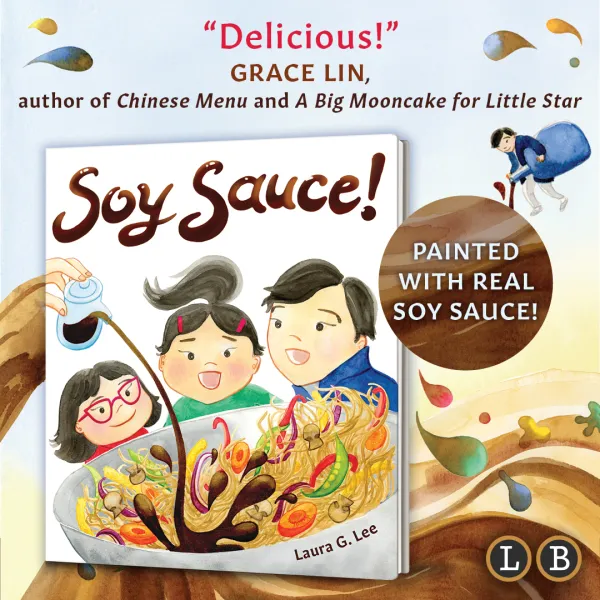
Welcome to the Back Matter Break Down! For today’s interview, I am excited to bring you a conversation with an amazing author-illustrator, Laura G. Lee! I was fascinated by her book from the moment I learned that she used actual soy sauce in the illustrations. Her experience putting together the back matter for this book is also super interesting, so I know you’re in for a good read. And don’t forget to scroll all the way to the end for this week’s author giveaway! Let’s go!

Book: Soy Sauce!

Author / Illustrator: Laura G. Lee

Publisher / Year: Little, Brown Books for Young Readers, 2025

Genre: Non Fiction

Topics: Food, Cooking, Asian Cultures

Blurb: Salty, savory, rich, and even sweet, soy sauce is as fascinating to make as it is delicious to eat! Luan makes a classic Chinese soy sauce. Haru uses his own recipe at his family’s traditional Japanese brewery. And Yoo-mi’s Korean soy sauce features special ingredients to make it spicy and sweet. With unique ingredients that reflect different Asian cultures, and a brewing process that can take years, even decades, soy sauce holds deep meaning and flavorful history in every drop.

Book Word Count: 278 words

What is your back matter word count?

207 words 

At what phase of the drafting/revising/publishing process did you decide your book needed back matter?  

Probably in my early research–I knew there were a lot of cultural ingredients and scientific terms that readers may not catch. The story of soy sauce is so rich historically and culturally, the back matter gave me a chance to point readers to deeper explorations in how soy sauce is made, and the countries that make it.

What was the earliest version of the back matter like? Can you show us snippets?

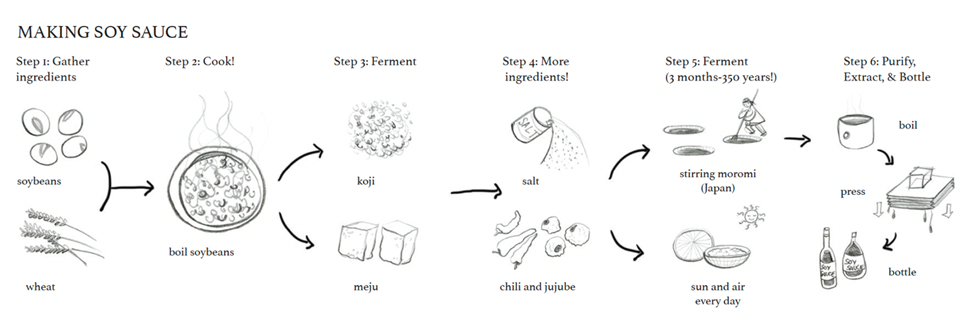
My earlier version of back matter included a ‘production’ diagram of how soy sauce is made. As we got into it, we realized it was somewhat of a challenge to make a single diagram for all soy sauce production. It’s made in many different ways, in different places. Instead, we opted to highlight the differences in ingredients in the Glossary, and steer away from the ‘how to’ diagram. However, I do use that same diagram to explain in school visits the ‘basic process’, then go into more specifics. Below is the diagram that got cut from the final back matter. As you can see, it became a challenge to represent the soy sauce making process in a singular way- as there are variations in ingredients, and process throughout.

Sketch version of Making Soy Sauce chart, courtesy of Laura G. Lee

What changes and revisions (if any) came about after working with the editor/agent? Are there any other soy sauce facts that you wanted to include in the back matter but didn’t make the cut?

 I think the essence of the original back matter was preserved, but became more visual as I worked with my editorial and art team. They suggested creating more of a visual glossary, with recognizable elements and characters from the book, to peak reader’s interest. I really wanted to include the Korean soybean block step, making meju, in the original story but because that was streamlined, I was able to still create an element for it in the back matter. While I am sure there are some cool aspects of soy sauce that didn’t make the cut, I like to think of back matter at a jumping off point to deeper questions and research–so I think we did hit all the big highlights.

At any point, did you consider including a recipe in the back matter?

I think we considered it early on, but veered away from it because there is no single recipe for soy sauce that could have been the perfect one. So we chose instead to represent its diversity and range, and share its cultural and historical context instead.

What were some challenges (if any) that arose during the back matter publishing process?

At some point I learned I might not be able to print the book in China because of the reference in the back matter to Taiwan. It was an unexpected surprise in the process, and my publishing team leaned on me to decide what to do–I chose to keep the elements of Taiwan in, because it was important to me and my family (my kids are half-Taiwanese, half-Korean). So we printed the book in Malaysia instead. And I’m happy we did! I give huge kudos to my publishing team at Hachette for supporting my decision.

I love the idea of a Visual Glossary like you have in your book. What tips (if any) can you offer to author-illustrators about designing creative back matter?

Hm…. good question. I think back matter adds to the story, it’s something that like the book, ideally, kids will return to. So think of them as jumping off points to deeper explorations. Ask yourself, what might readers relate to, and want to know more about? Is there anything particularly symbolic in your book that has a backstory? Then dive in. I like to think of back matter as the starting point to a conversation.


Thank you, Laura! It’s so helpful and interesting to get a look into your creative process in putting this book together, as well as how you navigated some unexpected challenges. You’ve given us some great things to think about! Please support Laura:

Book purchase: https://www.hachettebookgroup.com/titles/laura-g-lee/soy-sauce/9781523528387/?lens=little-brown-books-for-young-readers

Instagram: lauragleestudio

Laura’s Upcoming events:

– SOY SAUCE! Storytime and Signing at Water Street Books, Exeter, NH, on 5/3/25 at 1:15pm EST

– SOY SAUCE! Author Talk at the San Mateo Public Library, San Mateo, CA, on 5/10/25 at 11am PDT

– Bay Area Book Festival (Berkeley, CA) – Play with Your Food!, at Berkeley Public Library Children’s Nonfiction Area: Charlotte Cheng, Sara Fajardo, and Laura Lee emceed by Cinnamongirl Funmilayo on Saturday, May 31st at 3pm

Now for the giveaway!

Laura G. Lee has generously offered a 30 min zoom AMA to one lucky winner! To enter: leave one comment on this blog post by April 22, 2025 at 11:59pm Pacific Time. For additional entries, leave a comment on Judy’s BlueSky and/or Instagram posts about this post for a maximum of 2 bonus entries. (Remember to check back on this blog post and social media to see if you are selected as a winner!)

Thank you for reading!

Don’t miss future posts! Subscribe to my blog:

Back Matter Break Down: Evidence!: How Dr. John Snow Solved the Mystery of Cholera

Welcome to the Back Matter Break Down! The book we’ll look at today is one of my favorite non-fiction picture books from thelast year. I’ve always been a fan of Deborah Hopkinson’s work, and this is one of her best. My 7-year old son also gives this book a ringing endorsement, and I loved the back matter. So let’s go!

Book: Evidence!: How Dr. John Snow Solved the Mystery of Cholera

Author: Deborah Hopkinson

Illustrator: Nik Henderson

Publisher / Year: Knopf Books for Young Readers, 2024

Genre: Non-Fiction / Biography

Topics: Diseases, History, Medical Mystery, Science, Biography

Blurb: In 19th century London, the spread of cholera was as unstoppable as it was deadly. Dr. Snow was determined to stop it, but he had a problem: His best theory of how the disease was spread flew in the face of popular opinion. He needed evidence, and he needed to find it fast, before more lives were lost. Taking on the role of detective as well as doctor, Dr. Snow knocked on doors, asked questions and mapped out the data he’d collected. What he discovered would come to define the way we think about public health to this day.

Book Word Count: about 1100 words

Back Matter Word Count: about 730 words plus resources lists

Back Matter Sections:

1. The Case Against the Broad Street Pump (about 200 words)

Deborah Hopkinson provides the reader with a little bit more back story into the history of the Broad Street pump, which is the focal point of the book’s narrative. Instead of re-hashing the book’s events, thought, she tells us about the aftermath of the case and the impact on those involved.

2. Dr. John Snow (1813-1858) (about 180 words)

Here we get brief biography of the book’s main character, Dr. John Snow. Many of the details included in this section are briefly mentioned or alluded to in Hopkinson’s text, but now get a more thorough explanation and learn about his lasting impact on the medical field.

3. Major Infectious Diseases and Their Causes (about 350 words)

In keeping with the book’s theme and title, this section lists eight different infectious diseases and what we know about them due to research and evidence. A few diseases that are listed are Covid-19, HIV, and polio. Each disease is listed with its scientific name or name variations, along with short description of the disease, and the ways that scientists have developed to treat or even cure the disease. All this information is covered in just a few sentences per disease!

4. Internet Resources

This is short section listing two URLs that link to more information about Dr. John Snow.

5. Books About Dr. John Snow

Hopkinson lists two books written for adults in MLA formatting about Dr. John Snow.

6. Books for Young Readers About Epidemics

Hopkinson lists five non-fiction books written for kids or youth in MLA formatting about diseases and historical outbreaks.

Takeaways: Hopkinson’s back matter manages to do a lot with an economy of words. She doesn’t re-hash the events covered in her book, but gives the curious readers a bit more information, and sources where they can continue to feed their curiosity depending on what topic in the book fascinated them most. The back matter also nicely carries the book’s main theme of evidence and uses that as a framework for presenting all of the extra text in the back matter.

Tips: What ideas, topics and concepts in your picture book text will inspire curiosity in your readers? Whether you are writing fiction or non-fiction, you back matter can be a chance to lean into curiosity and give readers more opportunities to discover new facts or ideas. What is your book’s strongest theme? Find a way to use that theme as a unique framing device for the information or format of the back matter.

Thank you for reading! Leave a comment to keep the conversation going or to suggest a book for future blog posts!

Don’t miss future posts! Subscribe to my blog:

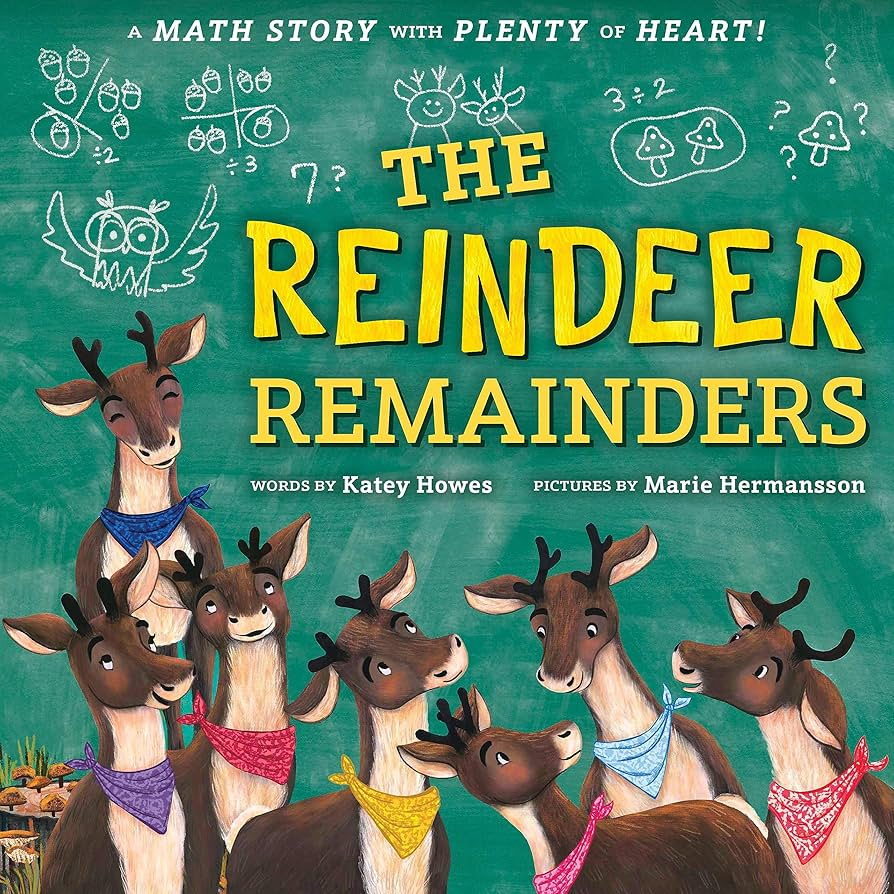
Back Matter Break Down: The Reindeer Remainders

Welcome to the Back Matter Break Down! For my final blog post of the year, I must have Christmas and holidays on the brain which is why I gravitated towards this book featuring reindeer. But let’s be clear, this is NOT a Christmas book! Instead we have a autumnal color palette with a mix of math and lessons in inclusion, all wrapped up in a delightful rhyming package! The back matter is going to give us plenty of things to talk about too, so let’s dive in!

Book: The Reindeer Remainders

Author: Katey Howes

Illustrator: Marie Hermansson

Publisher / Year: Sourcebooks Explore, 2024

Genre: Fiction

Topics: Math Concepts, School, Inclusion, Belonging

Blurb: A class of a dozen reindeer is preparing for the big showcase night event when a new student arrives. This isn’t a big deal until it’s time to divide in groups, and there’s a leftover reindeer every single time. How will the class make sure everyone feels included? And what will they learn in the process?

Book Word Count: about 430 words

Back Matter Word Count: about 370 words

Back Matter Sections:

1. Remainders and Primes (about 120 words)

To kick off the back matter, author Katey Howes, spends a page giving readers more explanation about the math concepts that are demonstrated in the story. In an earlier spread, the idea of prime numbers is introduced with illustrations doing most the heavy lifting for readers. Here, Marie Hermansson’s illustrations and kid friendly diagrams are placed alongside Howe’s explanations of remainders and prime numbers to ensure that the meaning will be clear to a range of ages. The section ends with the question, “Can you name any other prime numbers?” and kids should be able to answer based on the images and information provided.

2. When Someone Is Left Out (about 250 words)

The second page of the back matter switches gears to focus on the book’s other important theme of inclusion and belonging. Here Howes talks directly to readers to help them identify the feelings that can arise in someone who feels left out, and provides some tools to deal with those feelings. There are helpful solutions for kids to use when they are the one feeling left out, but Howes doesn’t end it there. She also makes sure to help kids build empathy and take action to help when they observe someone else being left out. Within this text, we get more illustrations of the book’s reindeer characters demonstrating these emotions and connecting readers back to the events of the story.

Takeaways: The mix of illustrations and text in the math section are a great way to ensure that readers of different age levels will be able to grasp the concepts. And the section on inclusion, has great questions and tips that will engage kids or lead into important conversations with the adults reading with them. When I look at these two pages side-by-side, it occurs to me that either one could have been decent back matter for this book on its own. But put them together, and you have back matter that is twice as good and lends itself to re-readability. Readers have choice about what topic they want to focus on and both can lead to interesting conversations with kids.

Tips: Try to make room in the back matter to cover all of different themes contained in your book! This will add to your re-readability factor and will be an extra selling point, especially if you are able to hit different disciplines.

Thank you for reading! Leave a comment to keep the conversation going or to suggest a book for future blog posts!

Don’t miss future posts! Subscribe to my blog:

World Read Aloud Day 2025 – Zoom with a Self-Published Author or Illustrator

It’s time to get ready for World Read Aloud Day 2025! The list of self-published volunteers is live! Keep reading for all the details:

If you’re new here, I’m Judy Campbell-Smith. I am the author of AJ’s Neighborhood, a picture book I self-published in 2022, and Ice Cream Everywhere: Sweet Stories from Around the World, released by Sleeping Bear Press in March 2024. A few years ago, I discovered that the amazing Kate Messner was organizing volunteers for World Read Aloud Day, but she was focusing on traditionally published authors and illustrators. So I decided to step up so that self-published authors and illustrators could also participate in this wonderful celebration of reading and literacy.

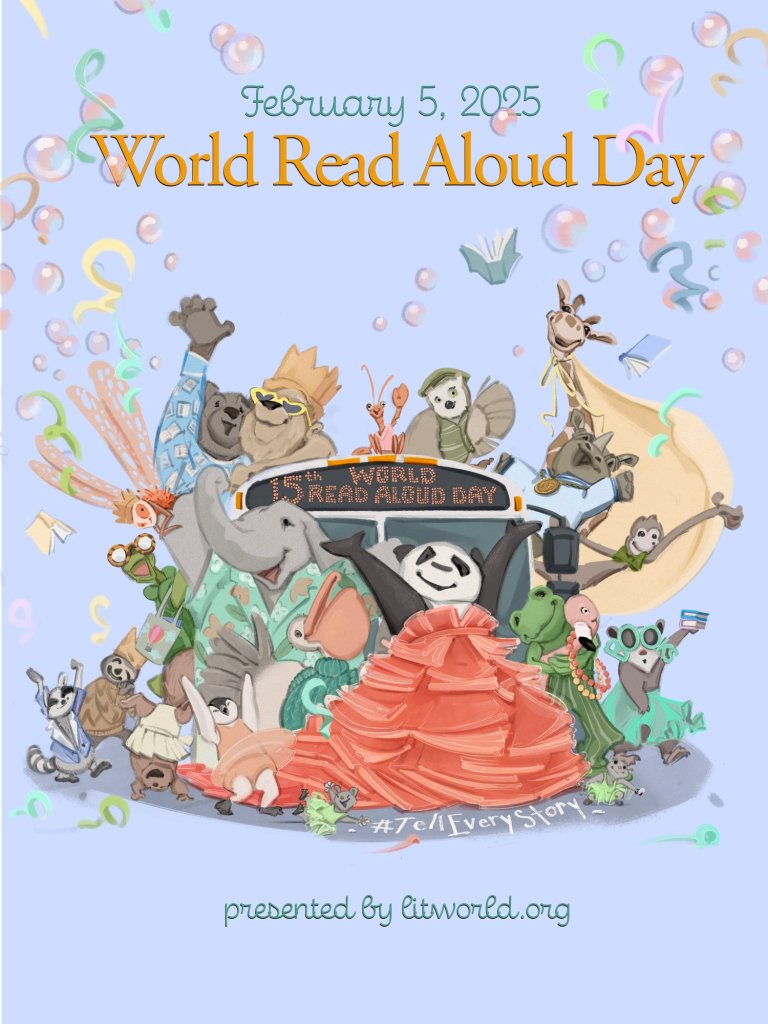
World Read Aloud Day is February 5, 2025! If you are an educator or librarian, you can contact a volunteer to zoom with your group on this day.

WRAD virtual visits are not elaborate or time-consuming to plan. Your presentation should last 10-15 and should go something like this:

1-2 minutes: Author gives a quick introduction & talks a little about their books.
3-5 minutes: Author reads aloud a short picture book, or a short excerpt from a chapter book/novel
5-10 minutes: Author answers a few questions from students about reading/writing
1-2 minutes: Author book-talks a couple books they love (but didn’t write!) as recommendations

To set up a WRAD 2025 visit:

  • Take a look at this list of self-published volunteers and check out their books to see who will be a good fit for your group/schedule.
  • Use the contact info listed to get in touch with the volunteer directly to request a visit. In your message, be sure to include:
    • Your name and what grade(s) you work with
    • Your city and time zone (this is important for scheduling!)
    • Possible times to connect on February 5th. Please note authors’ availability and time zones. Adjust accordingly if yours is different!
    • Your preferred platform (Zoom, Google Meet, etc.)
    • A phone number where you can be reached on that day in case of technical issues

A note for educators and librarians: please honor your commitments and plan accordingly. Please do not double book or cancel unless there is an emergency. Also, if you’re looking for traditionally published authors and illustrators, check out Kate Messner’s list of traditionally published authors and illustrators.

A note for self-published volunteers: please remember to let me know when your schedule is full so that I can remove your name from the list! If you haven’t signed up yet, there’s still time to join in the fun! Use this link and fill out the form: WRAD 2025 – Call for Self-Published Volunteers

For more info, visit the WRAD website: https://www.litworld.org/learn-more-about-wrad

Don’t miss future posts! Subscribe to my blog:

World Read Aloud Day 2025 – Call for Self-Published Volunteers

I’m so excited for this: World Read Aloud Day is back! For those unfamiliar, World Read Aloud Day was founded by an organization called LitWorld to “celebrate the power of reading aloud to create community and amplify new stories, and to advocate for literacy as a foundational human right.”

This year WRAD will be on February 5, 2025!

I love WRAD because it’s a wonderful chance for authors and illustrators to celebrate the love of reading with children around the world by providing free virtual to teachers and librarians. This will by my third year organizing the self-published /non-traditionally published volunteers who want to participate!

IF YOU ARE A SELF-PUBLISHED AUTHOR or ILLUSTRATOR, I hope you will sign up to participate in WRAD 2025! Last year we had more self-pub participants than the year before, and I hope this year is even bigger!

WRAD virtual visits are not elaborate or time-consuming to plan. Your presentation should last 10-15 and should go something like this:

1-2 minutes: Author gives a quick introduction & talks a little about their books.
3-5 minutes: Author reads aloud a short picture book, or a short excerpt from a chapter book/novel
5-10 minutes: Author answers a few questions from students about reading/writing
1-2 minutes: Author book-talks a couple books they love (but didn’t write!) as recommendations

Any self-published author or illustrator who would like to volunteer to do free virtual visits for World Read Aloud Day (February 5, 2025) please click this link and fill out the form:

WRAD 2025 – Call for Self-Published Volunteers

Photo by Yan Krukau on Pexels.com

Traditionally published folks, you are also welcome to volunteer! As always, Kate Messner is organizing a sign up list for traditionally published authors & illustrators who would like to participate, so please visit her list to sign up: https://forms.gle/H8QNw9rL1qdh9rrt6https://forms.gle/H8QNw9rL1qdh9rrt6

TEACHERS & LIBRARIANS: In a few weeks, the list of volunteers will be made public for you to see who is available to join your group. Check back soon!

For more info, visit the WRAD website: https://www.litworld.org/learn-more-about-wrad