Back Matter Break Down: Interview with Ann Suk Wang

Welcome to the Back Matter Break Down! Today I am excited to bring you an interview with Ann Suk Wang! Ann’s debut picture book is one of those special books that manages to deal with a tough topic, but is also is full of beauty and hope. Let’s take a look!

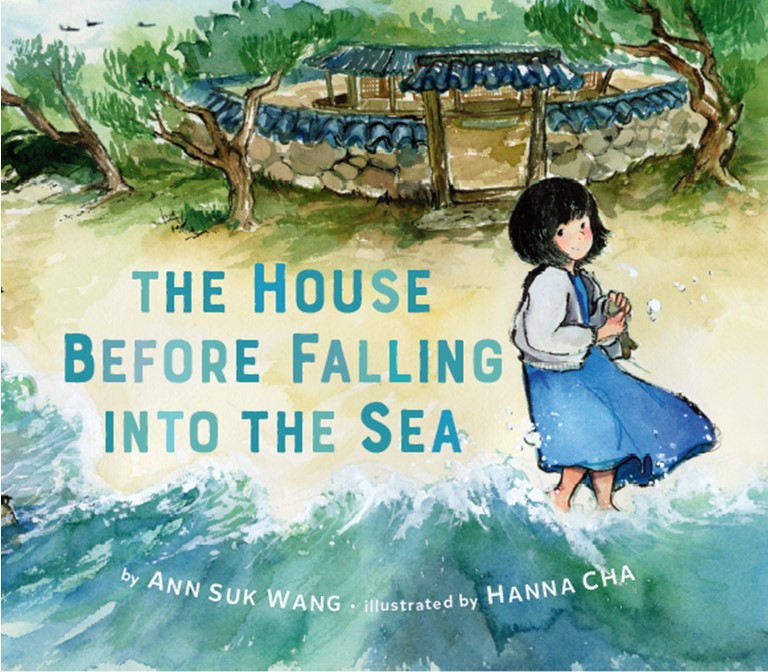
Book: The House Before Falling Into the Sea

Author: Ann Suk Wang

Illustrator: Hanna Cha

Publisher / Year: Dial Books, 2024

Topics: Refugees, War, Kindness, Korea

Blurb: Every day, more and more people fleeing war in the north show up at Kyung Tak and her family’s house on the southeastern shore of Korea. With nowhere else to go, the Taks’ home is these migrants’ last chance of refuge “before falling into the sea,” and the household quickly becomes crowded, hot, and noisy. Then war sirens cry out over Kyung’s city too, and her family and their guests take shelter underground. When the sirens stop, Kyung is upset—she wishes everything could go back to the way it was before: before the sirens, before strangers started coming into their home. But after an important talk with her parents, her new friend Sunhee, and Sunhee’s father, Kyung realizes something important: We’re stronger when we have each other, and the kindness we show one another in the darkest of times is a gift we’ll never regret.

Word Count: Just under 800

Back Matter Word Count: Just over 1000 words

At what phase of the drafting/revising/publishing process did you decide your book needed back matter?

I knew from the very beginning. In fact, when I queried agents, I included it.

Did you need to do any research for the back matter?

A little bit because I included a glossary of Korean words that are spelled in English many different ways. I didn’t know which was officially correct. I also had to make sure my Korean War facts were accurate. I had to double and triple check. (It’s probably the journalist in me?)

What did the first draft of the back matter look like?

Unfortunately, I don’t really save older copies. I really should because it would be interesting to see how it evolved. But usually, I wipe things clear so I don’t get confused with different versions. But basically, it was shorter. I had fewer Korean words for the glossary. I don’t think I included my section on Korean names until later.

Tell us about the back matter revision process. Why did changes occur? What changes and revisions came about after working with an editor/agent?

My ideas in my author’s note stayed about the same. But with my editor’s help, of course, it was greatly improved and tightened up. And I knew I wanted to include “Questions to Consider” because kids could easily go deeper into the subject matter, if asked various questions. So this was added.

Did you know the story of Hanna Cha’s family prior to seeing her illustrator note?

Yes. After she accepted the project, she started to ask her grandmother questions about the war. Then in a letter to my editor, she mentioned that she discovered how her family were on the opposite side of the story, making their way down to Busan. It was such an amazing pairing, two stories merging in an author and illustrator! She really understood the story and embraced it in her illustrations, elevating the whole book in an entirely special way. I think it shows!

What was the most challenging part of process of the back matter publishing process?

I think the glossary was the most challenging because of the different spelling of Korean words in English (the Romanization is tricky.) What’s mostly used is not necessarily correct. So we had to decide how to spell things. It felt “important” in that the way we spelled things could be passed on and add to the common usage. So I wanted to get it right.

Is your back matter aimed for kid readers or adults?

Definitely, it’s for kids. But I understand that adults may be more interested.

What do you hope readers will take away after reading your back matter content?

I hope kids will become more interested in Korean culture, but mostly in being kind to people around them and growing in more love toward their neighbors.

What tips or resources (if any) can you offer picture book writers for writing back matter?

I don’t know of any resources for back matter, except your wonderful blog. But as for tips, I can just say to treat the back matter with respect. The back is where the facts can shine and kids have a chance to go deeper into the subject matter. So put on your journalism hat and research well while putting all the most important things into a succinct story, listing, graph, etc.


Thank you, Ann, for getting all of us picture book writers excited about putting on our journalism hats so we can tackle our back matter with confidence!

Please support Ann! Visit her website and subscribe to her blog: www.annsukwang.com. Follow her on Instagram: @annsukwang. For event updates and purchasing information for signed copies of The House Before Falling Into the Sea, visit her Linktr.ee: linktr.ee/annsukwang.

Now for a giveaway! Ann has generously offered to give one lucky person a signed copy of The House Before Falling Into the Sea! To enter: leave one comment on this blog post by April 23, 2024 at 11:59pm Pacific Time. A winner will be chosen at random and notified on April 17, 2024. One entry per person.

UPDATE: The giveaway is now closed. Congrats to Andrea W! You are the winner!

Thank you for reading!

Don’t miss future posts! Subscribe to my blog:
Back Matter Break Down: Ice Cream Everywhere

Welcome to the Back Matter Break Down! I am SUPER excited because today I get to share all about back matter in my very own book! I am going to use the same format I use for my other author interviews so this blog series can remain a useful resource. I hope you enjoy learning a bit more about the journey I went on with this book. And stay to the end for a giveaway! Let’s dive in!

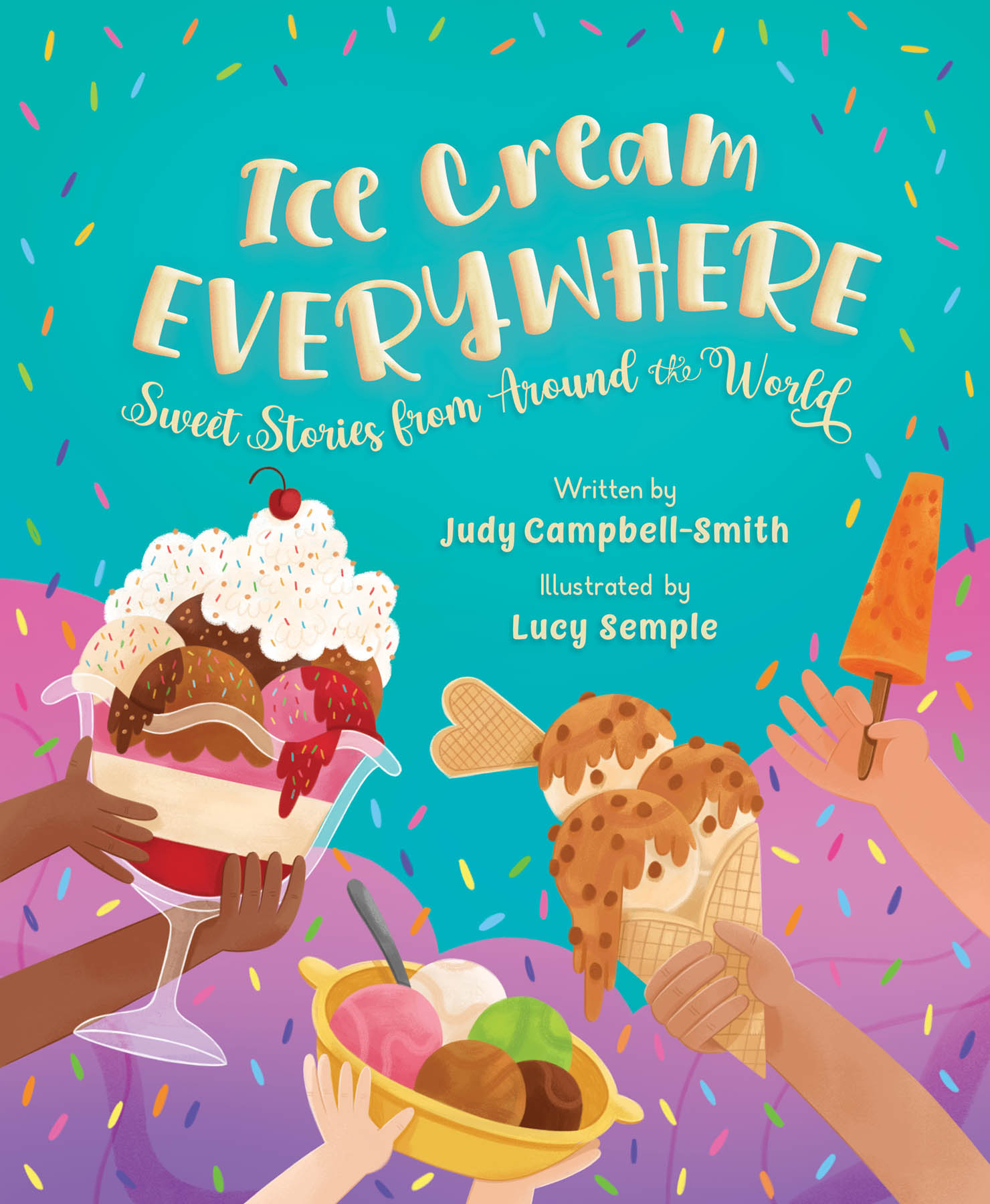
Book: Ice Cream Everywhere: Sweet Stories from Around the World

Author: Judy Campbell-Smith (it’s me!)

Illustrator: Lucy Semple

Publisher / Year: Sleeping Bear Press, 2023

Topics: Ice Cream, Geography, Food

Blurb: Everywhere you go, all around the world people are eating ice cream! And while some folks spoon up sundaes and some savor Syrian bouza–one thing is always true: ice cream is joy! Travel the globe and discover a mouthwatering selection of cold, creamy treats. Which one is your favorite?! Ice Cream Everywhere includes a map, an author’s note–and three scoops of fun!

Word Count: 1300

Back matter word count: 275

Back Matter Sections:

1. Map (47 words): In which I wrap up the theme of joy in the book along with an illustrated map showing the countries where each of the book’s ice cream treats.

2. Author’s Note (108 words): In my author’s note, I explain how my time spent in New Zealand eating ice cream and gelato provided the inspiration for this book. I also add that living in Southern California gave me many opportunities to try out the treats mentioned in the book as part of my research. Lucy Semple framed my note in the center of a delightful scene of the books characters sharing an ice cream picnic together.

3. What’s the Difference? (120 words): On this page, I briefly explain the differences between ice cream, gelato, kulfi, Turkish Maraş and Syrian bouza. Again, Lucy Semple added illustrations of each treat to accompany the explanations.

At what phase of the drafting/revising/publishing process did I decide my book needed back matter?

Once I figured out what the structure of the book would be and I finally had a full draft (which took a looooong time), I knew there would be back matter with the book. It just made sense considering how much information was packed into the book and fit in with other books of the genre.

What did the first draft of the back matter look like?

The first draft of the back matter consisted of an attempt at a glossary of terms found in the book and a note showing the difference between ice cream versus gelato. I say “attempt” because it was very messy in the first draft. I also had a list of selected resources which stuck around for quite a while in subsequent drafts.

Why did changes occur? What changes and revisions came about after working with the editor/agent?

The idea of a glossary went by the wayside during my own revision process. A glossary didn’t seem necessary after I pivoted to including factual sidebars to go alongside the fictional stories about each country and ice cream treat.

The version that I queried with and ended up submitting to editors had the “What’s the Difference?” section now expanded to also include kulfi, bouza, and Maraş. It also still had a bibliography of resources and a list of ice cream themed picture books for further reading. When I started working with Sarah Rockett, my editor at Sleeping Bear Press, she recommended removing the resources and the further reading elements with the idea they could be used in in additional materials or teacher guides. I was thrilled when Sarah suggested we add an illustrated map in the back matter. I hadn’t considered that before it was a perfect addition for this book. My first book, AJ’s Neighborhood, features a map at the end, so I thought it was cool that maps can be part of my author brand.

At this point I requested that we add a short author’s note to the back matter because I wanted to give readers a little bit about how my own travels provided the inspiration for the book.

Is my back matter aimed at kid readers or adults? What do I hope readers will take away after reading your back matter content?

I think my back matter is really more aimed at kid readers. I know lots of kids like exploring maps and I tried to keep the text in the back matter short so kids would not be intimidated to keep reading. I hope readers will come away with a growing curiosity about other countries and be inspired to explore new foods.

Reflecting on this process and what you learned, what tips can you offer picture book writers for writing back matter?

My tip for picture book writers is to look at your mentor texts and books in your genre to start thinking about your own back matter. My mentor texts had back matter but also sidebar facts which is what got me thinking about what info would be better used within my spreads and what info should stay in the back matter. From there, think about what else you could add to your back matter–get creative!

Are there resources to share that would be helpful for writer’s wanting to learn more about back matter?

When I was putting this manuscript together, the blog posts at Nonfiction Fest were very helpful. Yes, they focus on nonfiction specifically but there is a lot of great content for dealing with factual presentations in picture books. The Nonfiction Fest blog posts were very helpful to me for a lot of things.


Thank you so much for reading post about my book!

Purchase Ice Cream Everywhere: Sweet Stories from Around the World

Say hi to me on Twitter: @J_CampbellSmith

Say hi to me on Instagram: @judycampbellsmith

Follow @PBBuds24 on Instagram and Twitter to learn more about amazing books coming out this year!

Join our community at PB Power Hour!

Time for a giveaway! I would like to offer 1 lucky winner their choice of either A) a 30 minute Ask-Me-Anything zoom chat (to talk about writing, publishing, back matter, etc) or B) a FREE 30-minute max Virtual School Visit (for yourself or gift to a teacher of your choice). To enter, leave a comment on the blog post by 11:59pm PT on March 25, 2024. One entry per person.

Update: The giveaway is now closed. Congrats to Donna – you are the winner!

Thanks for reading!

Don’t miss future posts! Subscribe to my blog:


Back Matter Break Down: Interview with Annette Whipple

Welcome to the Back Matter Break Down! Today we get to enjoy this interview with author Annette Whipple! She has so much great information to share with us as she has tackled back matter in so many of her non-fiction books. We are in for a treat because she’s going to share about several of her books today. Let’s dive in!

How do you decide what information will end up in the back matter versus in the main text of your non-fiction picture books?

As I’m writing, I can’t include all the wonderful facts I find in the main text. I use the interesting facts that don’t fit and consider if they’d work as back matter. I also want to include a way for the reader to interact with the topic more, so I often include hands-on activities as well as additional resources to learn more.

Tell us about the back matter revision process. Why do changes occur? What contributions and changes come as a result of working with editors?

I love back matter, so the revision process often includes me writing lots and letting my editor know that it doesn’t all need to be included. In a picture book, it’s important to leave room in the page count for it. I try to envision what it might look like (with photographs and/or illustrations), but sometimes something needs to be removed.

In The Truth About series, there are a lot of photos used alongside the text with some illustrated and graphic elements. How does your back matter text look when you are ready to submit? Do you use illustration notes?

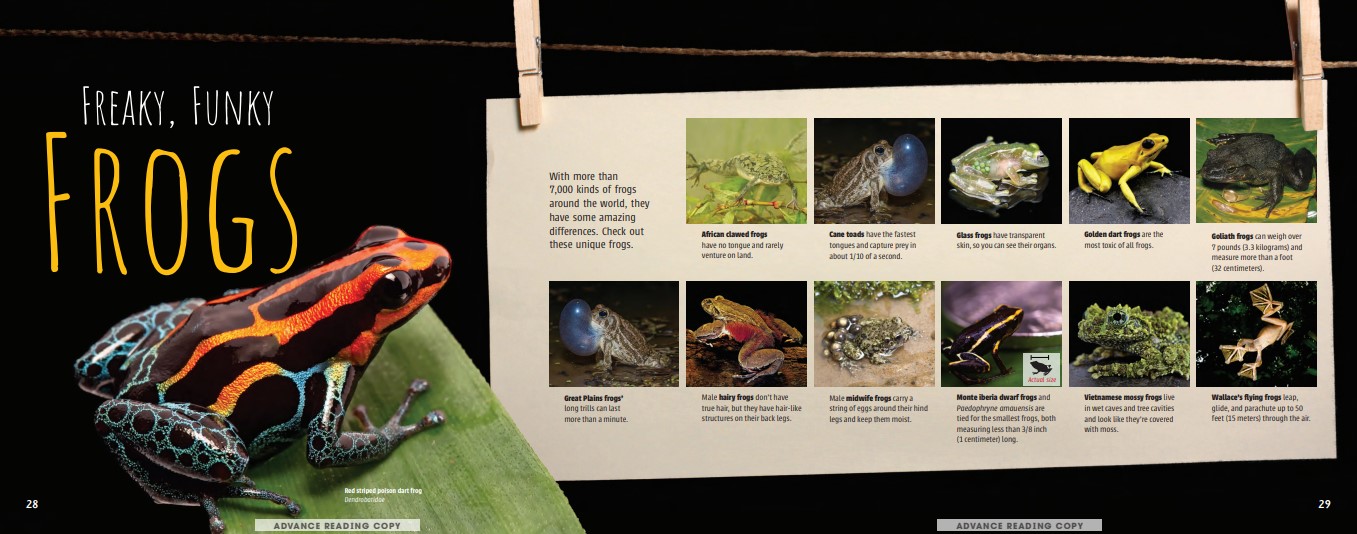
This series is beautifully designed. My illustration notes are fairly limited throughout the book, including the back matter. In the book Ribbit! The Truth About Frogs, I wanted to highlight cool frog species. I titled it “Freaky, Funky Frogs.” After a brief introduction, I wrote a sentence about each frog and what set it apart from others. At the end of this section of back matter, I included an illustration note. (My illustration notes are in gray text and brackets.)

The 228 words I wrote became a two-page spread seen here.

Ribbit! The Truth About Frogs actually had eight pages of back matter (plus another page with my author bio and photo on it). That’s a lot for a picture book.

Is your back matter aimed for kid readers or adults? What do you hope readers will take away after reading your back matter content?

At this point, my back matter has always been aimed at the kid reader instead of the adult. I write it with the purpose of helping the reader immerse themselves in the topic even more.

How do you come up with the projects that appear in the back matter for The Truth About Series? 

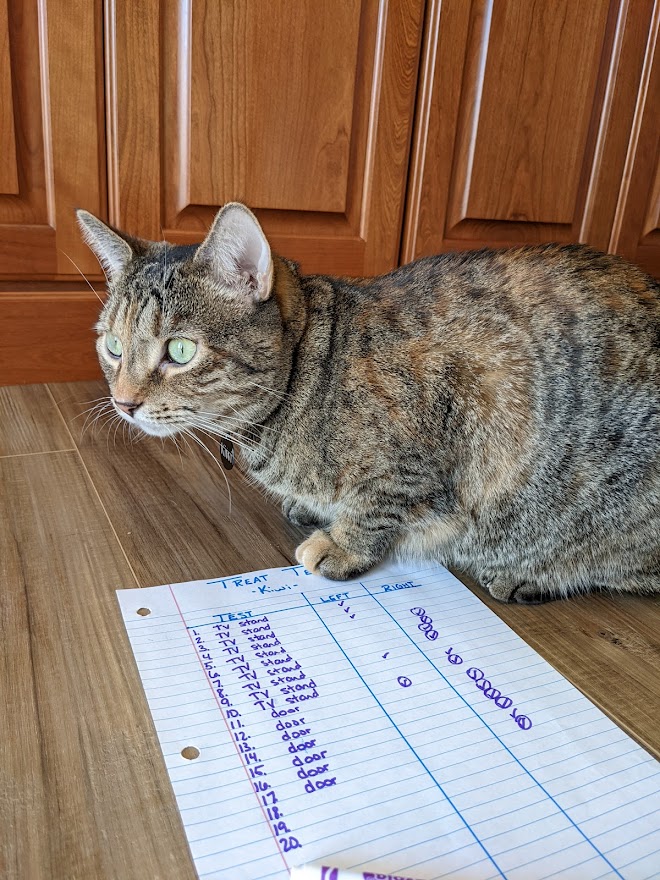
I was once a teacher, so I love coming up with hands-on ideas. I had a lot of trouble brainstorming a science-focused craft or activity for Meow! The Truth About Cats so I turned to Pinterest. There I found a great idea and made it my own. You wouldn’t believe how much fun it is learning if your cat is right-pawed or left-pawed!

What tips can you offer picture book writers for writing back matter?

Go beyond the bibliography/resources and glossary. Make the back matter something the reader will engage with. I have a whole blog post about back matter. https://www.annettewhipple.com/2022/01/writers-questions-about-back-matter.html

Are there resources or comp titles you can share that would be helpful for writer’s wanting to learn more about back matter? 

I’ve heard some authors use my series, The Truth About, for inspiration. However, I think borrowing 25 recently published books from your local library is a great place to start.  


Thank you, Annette! There’s so much good information here for anyone interested in back matter!

Please support Annette!

https://www.annettewhipple.com/ is full of resources for writers, both published and unpublished.

Follow Annette:

@AnnetteWhippleBooks on Instagram and Facebook

@AnnetteWhipple Twitter/X and Blusky

Thank you for reading!

Don’t miss future posts! Subscribe to my blog:
Back Matter Break Down: Interview with Jessica Whipple

Welcome to the Back Matter Break Down! I’m excited to bring you a really insightful interview with author Jessica Whipple, author of Enough Is… and I Think I Think A Lot. You’re going to love getting a peek at the behind-the-scenes process of writing the back matter for her latest book. Jessica is also giving away a 30-minute Brain Picking Session via Zoom, so make sure you read to the end of the post to find details on how to enter. Let’s dive in!

Book: I THINK I THINK A LOT

Author: Jessica Whipple

Illustrator: Josee Bisaillon

Publisher / Year: Free Spirit Publishing, 2023

Genre: Fiction

Topics: Social-Emotional, Mental Health

Blurb: “I think. I think a lot. I think I think a lot. More than most other kids.” A young girl notices and wonders about the ways she and her classmates approach doing good work, caring about people’s feelings, and showing they’re grateful. She comes to accept herself just as she is and celebrates the differences between herself and her classmates. “I care a lot. Not more than other kids, just in my own way.” Inspired by the author’s experience with obsessive-compulsive disorder (OCD), I Think I Think a Lot can be a starting point for discussions about overthinking or obsessive thought and about the many ways individuals see and experience the world. The neurodivergent main character allows readers to see themselves and others in the story and emphasizes self-acceptance in the face of comparison.

What is your manuscript word count? What is your back matter word count?

JW: I had to look back! Word count is about 500 for the story text and the back matter is about 850 words, perhaps more.

At what phase of the drafting/revising/publishing process for I Think I Think a Lot did you decide your book needed back matter?

JW: My book proposal to Free Spirit with back matter included. (Free Spirit requires a full book proposal with writing credits, a market analysis, and thorough comparative title research included.)

What did the first draft of the back matter look like?

JW: When I made the book proposal, the back matter was simply an author’s note of perhaps two paragraphs plus a few non-specific online OCD resources.

Tell us about the back matter revision process. How did editor/agent input cause changes, if any? How did you get to the final version we see in the book?

JW: Free Spirit wanted to include discussion questions–it’s one of their trademarks, so to speak. So I worked with the editor to write relevant questions that satisfied her requests and my own hopes for the book. Lastly, rather than a list of resources, we included a note about OCD including a definition and how to contact the International OCD Foundation online. So it was even better than my proposed list of resources.

Did you feel any concern or hesitancy about talking about your own OCD experiences in the back matter?

JW: No hesitancy, however the question was how to limit the many facets of my complicated experience having OCD. But the book already focuses on just one aspect of my experience, so that helped me focus my author’s note.

Reflecting on this process and what you learned, what tips can you offer picture book writers for writing back matter?

JW: One thing that comes to mind is to let yourself feel free to be your authentic self.


Thank you, Jessica! I love the advice you left us all with and appreciate you letting us see a bit of the process you went through to bring this back matter together!

Please support Jessica! You can purchase I Think I Think A Lot and Enough Is… wherever books are sold and she asks that you please consider your local independent bookseller.

Signed copies here: AuthorJessicaWhipple.com/books

Follow Jessica Whipple: @JessicaWhippl17 on Instagram and X/Twitter. She’d love to connect there!

Now for the GIVEAWAY! Jessica has generously offered a 30-minute Brain Picking Session via Zoom to one lucky person! To enter: Leave one comment on this blog post by January 23, 2024 at 11:59pm Pacific Time. A winner will be chosen at random and notified on January 24, 2024. One entry per person!

***** EDIT: The giveaway has now closed! Congrats to Kate R! ****

Thank you for reading!

Don’t miss future posts! Subscribe to my blog!

Back Matter Break Down: Jimi: Sounds Like A Rainbow

Welcome to another edition of Back Matter Break Down! Today’s post features a book with unique and fascinating back matter that I have remembered and thought about often in the years since I first read it. Let’s dive in!

Book cover of Jimi: Sounds Like a Rainbow, which features art work of young Jimi Hendrix playing a white guitar

Book: JIMI: SOUNDS LIKE A RAINBOW

Author: Gary Golio

Illustrator: Javaka Steptoe

Publisher / Year: Clarion Books, 2010

Genre: Non Fiction

Topics: Biography, Music, Musicians

Blurb: “Jimi Hendrix was many things: a superstar, a rebel, a hero, an innovator. But first, he was a boy named Jimmy who loved to draw and paint and listen to records. A boy who played air guitar with a broomstick and longed for a real guitar of his own. A boy who asked himself a question: Could someone paint pictures with sound?
This a story of a talented child who learns to see, hear, and interpret the world around him in his own unique way. It is also a story of a determined kid with a vision, who worked hard to become a devoted and masterful artist. Jimi Hendrix–a groundbreaking performer whose music shook the very foundations of rock ‘n’ roll.”

Book Word Count: 1740

Back Matter Word Count: 1150 words plus references

Back Matter Sections:

1. “More About Jimi Hendrix” – 2-page spread biography written by the author (about 550 words)

In this section, we read a more comprehensive biography of Jimi Hendrix with Gary Golio skipping over the childhood years that are the focus of the book’s narrative. We get a few paragraphs that take us through music career and achievements before switching to an examination of his cultural context. Golio references contemporary figures (like Bob Dylan and Martin Luther King Jr.) and events (the Civil Rights Movement) that were significant to Hendrix’s music and point of view. Finally, this section ends with a paragraph that states Hendrix’s year of death and lets us know his lasting influence and legacy in music history. Overall, this section aims to give readers to get a more complete story about Jimi Hendrix life beyond what they read in the main text.

2. “Author’s Note” – a statement by the author (about 250 words)

The back matter moves on to a second spread for Gary Golio’s author’s note. Here, instead of focusing on Jimi Hendrix’s life, we read about his infamous death. Golio acknowledges the role that drugs and alcohol played in ending Hendrix’s life and explains that many musicians in that era were also experimenting with substances. Golio shares that his experience as a clinical social worker has given him many opportunities to observe the negative causes and effects of substance abuse and addiction on people’s lives. He writes, “In the spirit of recognizing that addiction is a treatable disease, and that deaths like Jimi’s can be prevented, here are some resources for better understanding and addressing the dangers of substance abuse.”

What follows is a heading (WEBSITES) with a list of three websites each geared at different aged readers (three to six, ten to eleven, and young teens). Golio gives a brief 1-2 sentence description of the websites followed by their URL links.

After the websites, there is another heading (BOOKS) with three book sources listed in MLA format. There appears to be one book aimed at adults on effective communication with kids, and two books aimed at kids/youth on dealing with their problems and understanding substance abuse.

3. “Illustrator’s Note: Exploring the Inspiration Behind the Music” – a statement by the artist (about 350 words)

As hinted at in the title, illustrator Javaka Steptoe shares the ways he immersed himself in the life of Jimi Hendrix while working on this book. Steptoe reveals that he not only listened to Hedrix’s music, but also travelled to his childhood school and home. Steptoe states he purchased wood in Seattle, Hendrix’s hometown, which he used for the book’s artwork. He also found inspiration in trying to see the world through Jimi Hendrix’s eyes, keeping in mind the rainbow of colors and sounds that author Golio brings to life in his text. Steptoe celebrates the individual creativity that Jimi Hendrix embodied, as well as the potential creativity uniquely found in each of us.

4. “Sources and Resources” – This final page of the book for the reference section is further divided into three type of sources:

Books – There are seven books listed using the MLA Works Cited formatting. Of the seven books, most are biographies about Jimi Hendrix, except for one collection of Jimi Hendrix’s own writings, and a book by Hendrix’s father about his son.

Selected Discography: CDs, Videos and DVDs – The author lists a mix of albums by Jimi Hendrix and his bands, as well as a few recorded live performances on DVD.

Websites – There are two websites listed: Jimi Hendrix’s official website, and the website for a music museum in Seattle.

Takeaways: Author Gary Golio’s text of Jimi: Sounds Like a Rainbow stays firmly focused on Jimi Hendrix’s youth and his introduction to playing and performing music. With that in mind, Golio uses the back matter to fill in the blanks in give readers more information about his subject’s adult life, career and musical legacy. In doing so, he is forced to deal with the messy reality of Jimi Hendrix’s life, specifically the drug use which led to his untimely death. Rather than gloss over that fact, Golio takes time to discuss the issue head on. He relies on his professional expertise to explain substance abuse in a way young readers can understand while not judging or stigmatizing Hendrix or others who may be struggling with this disease. With the additional resources he provides for further study, Golio finds a way to tell readers about all the interesting and colorful aspects of Jimi Hendrix’s life, including the shades of gray that are often sidestepped in books for children.

Tips: Picture book biographies often focus on a specific era of the subject’s life, so use your back matter space to cover the years that don’t fit into your main narrative. If your subject’s life story touches on difficult topics, your back matter could be the place to dive into that complexity. Help your readers to appreciate that every hero has flaws and failures, but that doesn’t mean their stories aren’t worth sharing.

Thank you for reading! Please leave a comment to add to the conversation or suggest a book for a future blog post!

Don’t miss future posts! Subscribe to my blog!

I Am a Writer

I have been a writer my whole life, but only recently began calling myself one.

As a child, before I could really write my letters, I drew little flip books and made cartoons.

Later, I filled notebooks with stories I illustrated myself.

Later, I wrote a few poems, and many songs. I have several unsuccessful attempts at novels. For a short time after college, I wrote theater reviews for a local paper.

As an adult, I pursued careers in academia and the music industry, and worked in schools and offices. But I always had the dream of some day writing a novel and getting it published.

After my kids were born, I became a stay-at-home mom. I tried to get other jobs, but nothing came through that worked for our family. And still I hoped to write. The desire only grew with every year, and increasingly I felt like I was delaying something I was meant to do.

Well, when the pandemic hit, I realized I was not going to be getting a job anytime soon. So I decided to answer the voice that had been calling me for so long and pursue a writer’s life.

So here I am, trying to make a go of it. I have my first book coming out in less than three months, but it still feels weird to call myself a writer. I have always felt like that title was reserved for people making a living from their pen, people with an agent or a book deal, or at least a book in print. It feels like a jinx to use the label before my book comes out. But I have also never worked at something that felt more like my “calling” than this has. I don’t really know what a theology of calling would say about that in relation to me pursuing writing. All I can say is that I feel that I have internal and external confirmation that I am on a good path.

So I say I am a writer. I say this with hope and expectation, with determination and anticipation. If you’re reading this, you have found me only steps from my front door, starting a new adventure. Thank you for joining me and seeing me here at the beginning.